

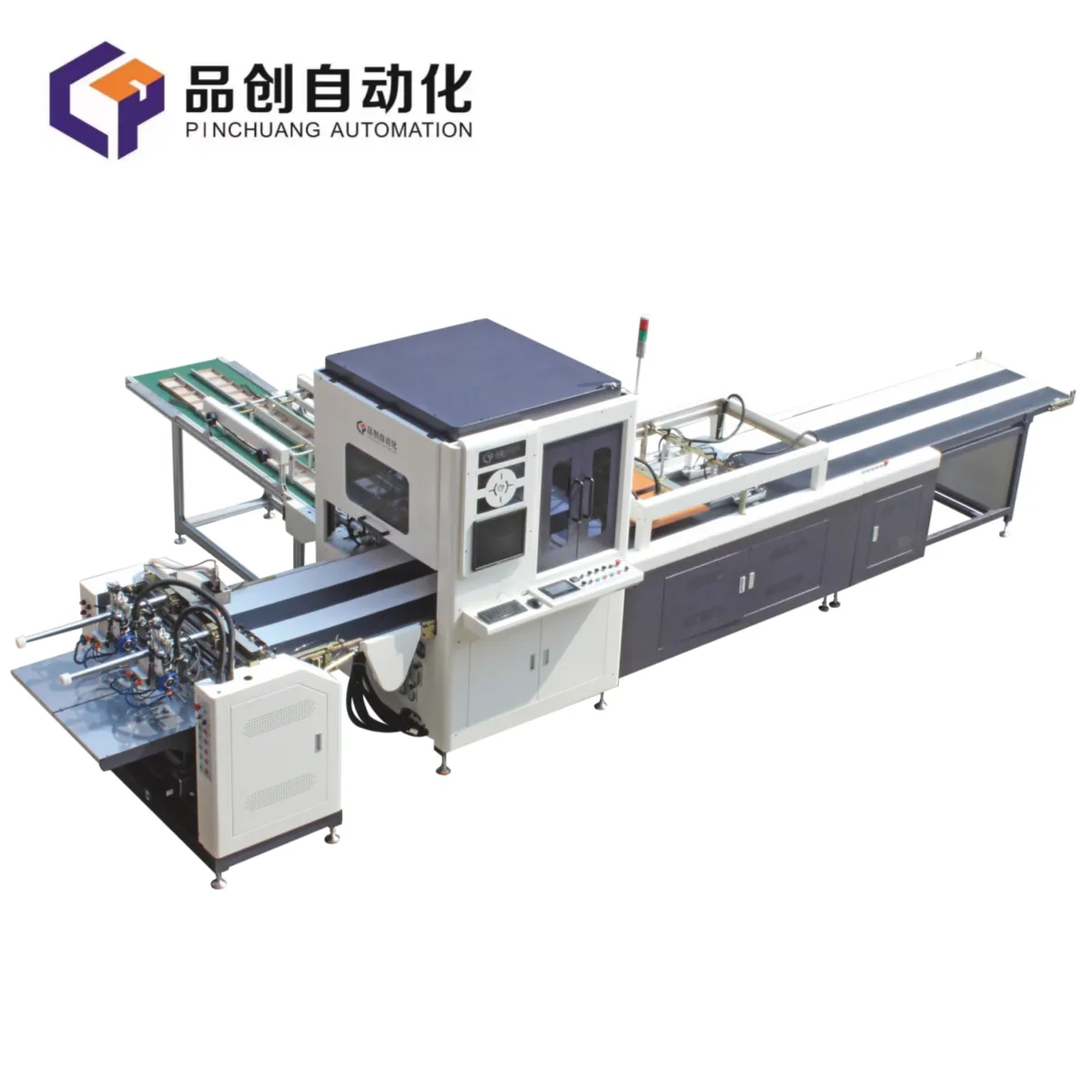
In modern rigid box manufacturing, precision alignment is one of the most critical factors influencing product quality. Whether it is placing wrapped paper onto greyboard, aligning printed surfaces, or positioning decorative elements, even slight deviations can result in visible defects. Traditionally, these alignment tasks relied heavily on manual positioning, which is time-consuming and prone to inconsistencies.
The introduction of the automatic visual positioning machine has significantly transformed this process. By combining advanced camera systems, intelligent software, and automated mechanical structures, this machine can detect, analyze, and adjust positions in real time. It ensures that every component is aligned with high precision, making it indispensable for high-end packaging industries such as cosmetics, electronics, jewelry, and luxury gifts.
This article explains what an automatic visual positioning machine is, how it works, and why it plays a crucial role in modern packaging production.
Understanding the Role of an Automatic Visual Positioning Machine
An automatic visual positioning machine is a specialized piece of equipment used in packaging production to achieve precise alignment between different materials or components. In rigid box manufacturing, it is primarily used to position printed paper, cardboard, or decorative layers accurately before assembly.
The machine replaces manual alignment processes, which rely on human judgment and can vary between operators. Instead, it uses high-resolution cameras and image recognition systems to identify reference points, such as printed marks or edges. Once detected, the system calculates the exact position and sends instructions to mechanical actuators to adjust the material accordingly.
This process ensures that every sheet is positioned consistently, regardless of production speed or operator skill level. The result is improved product quality, reduced material waste, and higher efficiency. For manufacturers producing premium packaging, the role of the automatic visual positioning machine is essential in maintaining both structural precision and visual perfection.
Core Components of an Automatic Visual Positioning Machine
To understand how an automatic visual positioning machine works, it is important to examine its main components. The system typically consists of a vision system, control unit, and mechanical positioning structure.
The vision system includes high-resolution industrial cameras and lighting devices. These cameras capture images of the material, while the lighting ensures that features such as edges, marks, or patterns are clearly visible. The captured images are then processed by the control unit, which uses advanced algorithms to analyze the position and orientation of the material.
The control system acts as the brain of the machine. It calculates deviations from the desired position and sends precise commands to the mechanical system. The mechanical structure includes conveyors, suction cups, robotic arms, or servo-driven platforms that physically move the material into the correct position.
Together, these components create a highly coordinated system capable of performing rapid and accurate positioning tasks, ensuring consistency across large production volumes.
Working Principle: Step-by-Step Process
The working process of an automatic visual positioning machine can be broken down into several steps. First, the material—such as printed paper or cardboard—is fed into the machine automatically through a conveyor or feeder system.
Next, the vision system captures images of the material. Using pre-set reference points or patterns, the system identifies the exact position and orientation of the sheet. This information is instantly processed by the control system, which calculates any misalignment.
Once the deviation is determined, the machine activates its positioning mechanism. Servo motors, robotic arms, or vacuum systems adjust the material’s position with high precision. This process occurs in milliseconds, ensuring that production speed is not compromised.
Finally, the aligned material is transferred to the next stage of production, such as gluing, folding, or box assembly. This automated workflow eliminates manual intervention, reduces errors, and ensures consistent results throughout the production process.
Advantages in Packaging and Rigid Box Production
The automatic visual positioning machine offers several advantages in packaging production. First, it significantly improves accuracy. By using digital image processing, the machine can achieve alignment precision far beyond what is possible manually. This is especially important for luxury packaging, where visual perfection is essential.
Second, it enhances efficiency. Automated positioning reduces the time required for alignment tasks, allowing manufacturers to increase production speed without sacrificing quality. Third, it reduces material waste. Accurate positioning minimizes errors, preventing misaligned prints or damaged materials.
Another advantage is scalability. As production demands increase, the machine can maintain consistent performance without additional labor. This makes it ideal for manufacturers handling large orders or high-volume production. Overall, the automatic visual positioning machine enables companies to deliver high-quality packaging while optimizing efficiency and reducing costs.
Applications Across Different Packaging Segments
The versatility of the automatic visual positioning machine makes it suitable for various packaging applications. In rigid box manufacturing, it is widely used for positioning wrapped paper onto greyboard, ensuring perfect alignment before folding and assembly.
In the cosmetics industry, where packaging aesthetics are critical, the machine ensures precise placement of printed designs and logos. In electronics packaging, it helps maintain structural accuracy for protective boxes. It is also used in gift box production, jewelry packaging, and premium retail boxes, where high-end finishes are required.
Additionally, the machine can be integrated into automated production lines, working alongside V grooving machines, corner pasting machines, and rigid box forming machines. This integration creates a seamless workflow that enhances productivity and ensures consistent quality across all stages of production.
Our Company and Solutions
Dongguan Pinchuang Automation Equipment Co., Ltd. specializes in advanced packaging machinery, including automatic visual positioning machines designed for high-precision rigid box production. Our machines combine cutting-edge vision technology with reliable mechanical systems to deliver consistent, high-speed performance.
We offer a complete range of packaging solutions, including automatic rigid box machines, V grooving machines, corner pasting machines, and paper gluing machines. Our equipment is designed for flexibility, allowing manufacturers to handle various box sizes, materials, and production volumes.
With a strong focus on innovation and customer support, we provide machine customization, technical training, and after-sales service to ensure optimal performance. By choosing our solutions, manufacturers can enhance production efficiency, reduce waste, and maintain the highest standards of packaging quality.
FAQ
Q1: What is an automatic visual positioning machine?
An automatic visual positioning machine is a system that uses cameras and software to detect and align materials precisely during packaging production.
Q2: How does an automatic visual positioning machine work?
It captures images of materials, analyzes their position using software, and adjusts alignment through mechanical systems such as servo motors or robotic arms.
Q3: Why is it important in rigid box production?
It ensures precise alignment of materials, improving product quality, reducing errors, and maintaining consistency in high-end packaging.
Q4: What industries use automatic visual positioning machines?
Industries such as cosmetics, electronics, jewelry, and luxury goods packaging widely use these machines for high-precision production.
Q5: How do I choose the right automatic visual positioning machine?
Consider factors like accuracy, speed, compatibility with materials, integration with production lines, and supplier support when selecting a machine.