

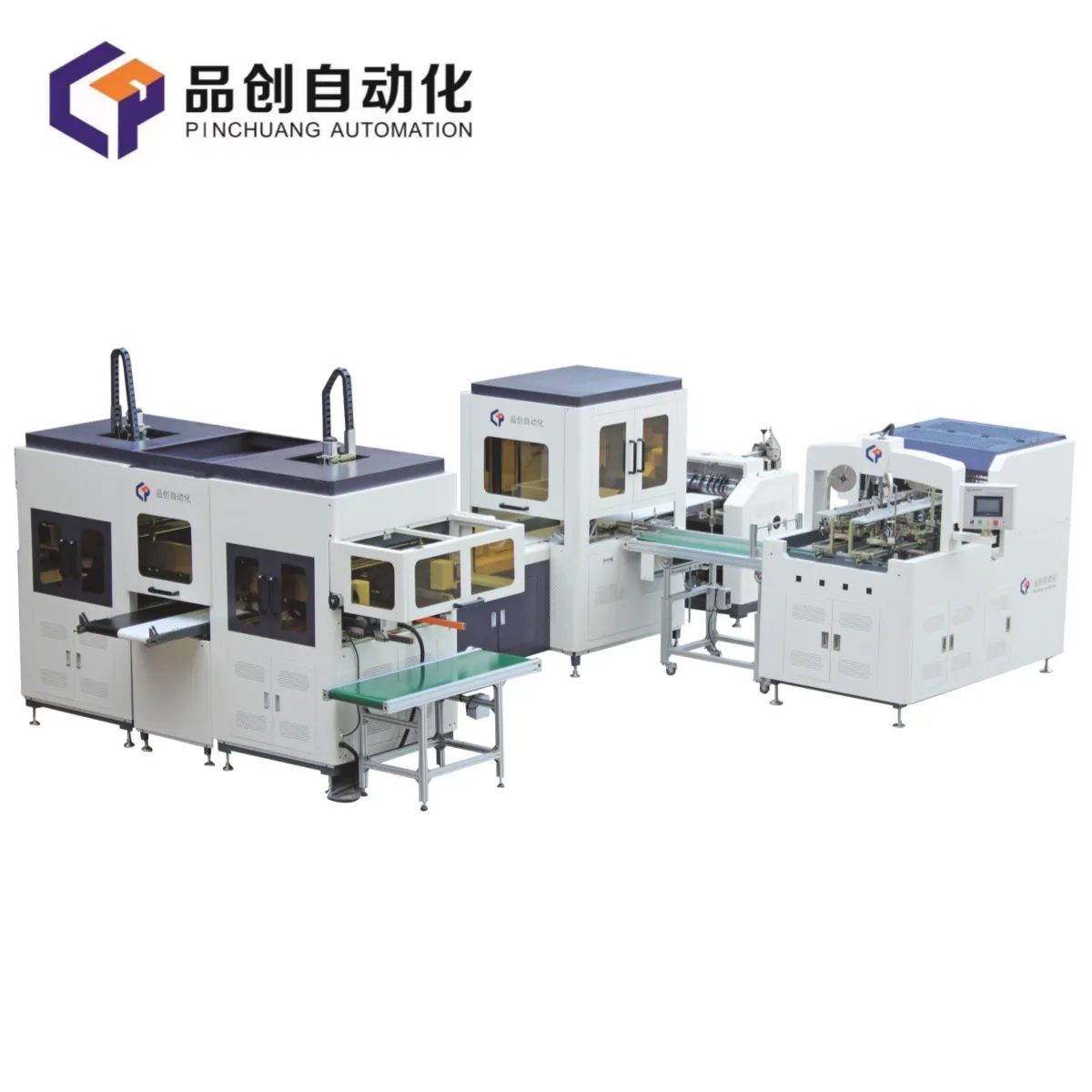
In the world of luxury packaging, the demand for high-quality, sturdy boxes has grown exponentially. Products such as cosmetics, jewelry, electronics, and premium gifts require packaging that not only protects the contents but also enhances brand perception. Traditional manual box making is labor-intensive and often inconsistent, leading to variable quality and slower production times. To overcome these challenges, manufacturers turn to the automatic rigid box machine, a cutting-edge solution that streamlines box production while maintaining superior quality.
An automatic rigid box machine is designed to automate the process of forming, folding, gluing, and assembling rigid boxes from paperboard, cardboard, or laminated sheets. Unlike manual assembly, which relies heavily on skilled labor, this machine ensures precise dimensions, uniform folds, and consistently strong adhesive bonds. By mechanizing each step, the automatic rigid box machine significantly reduces human error, increases production speed, and supports large-scale manufacturing without compromising the aesthetics or structural integrity of the boxes.
Core Components and Operation of an Automatic Rigid Box Machine
The operation of an automatic rigid box machine relies on a series of interconnected components that work together to produce perfectly folded boxes. The main components include automatic feeding systems, scoring and folding units, glue application modules, corner pasting mechanisms, and output conveyors. Each module is designed to handle specific stages of the box-making process with precision and efficiency.
First, the machine automatically feeds the paperboard sheets into the system. This feeding mechanism ensures proper alignment and prevents jamming or misfeeds. Next, the sheets pass through scoring and folding units, which create clean creases along designated fold lines. This step is critical to ensure that boxes are structurally sound and visually perfect.
The glue application system is another vital component. Modern machines use precise adhesive dispensers to control the amount and placement of glue, ensuring strong bonds without excess leakage. Some advanced machines also feature hot-melt or cold-glue options, depending on the material type and production requirements. Finally, corner pasting and assembly units fold and press the box into its final shape, ready for packaging. The result is a high-quality rigid box with consistent dimensions, excellent durability, and a flawless appearance.
Advantages of Using an Automatic Rigid Box Machine
Using an automatic rigid box machine offers several advantages over manual or semi-automatic production methods. The primary benefit is consistency. With automated scoring, folding, and gluing, manufacturers can produce hundreds or thousands of boxes with identical quality, minimizing the risk of errors that can occur in manual assembly.
Efficiency is another key advantage. These machines operate continuously, reducing labor requirements and increasing production capacity. For high-end packaging, this means that even intricate or multi-layered boxes can be produced quickly without sacrificing precision. Additionally, automated machines reduce material waste, as precise cutting and folding minimize errors and misaligned gluing.
Customization is also enhanced with automatic rigid box machines. Many machines allow operators to adjust box dimensions, folding angles, and adhesive settings quickly, making it possible to handle various box styles, thicknesses, and materials on the same production line. This flexibility is especially valuable for luxury packaging companies that offer multiple product lines or seasonal designs. Overall, automation ensures higher productivity, cost savings, and improved product quality.
Material Compatibility and Versatility
A crucial factor in the performance of an automatic rigid box machine is its compatibility with different materials. High-end packaging often involves thick paperboard, laminated sheets, coated materials, and specialty finishes. The machine must handle these materials without causing tearing, warping, or uneven folding.
Advanced machines offer adjustable settings for material thickness, glue type, and folding pressure. They can also handle laminated or coated boards that are commonly used for premium boxes, ensuring that the final product retains a smooth surface and clean edges. Additionally, some machines feature interchangeable tooling or programmable patterns to accommodate various box styles, including drawer boxes, lift-off lids, and multi-layered rigid boxes.
This versatility allows manufacturers to produce a wide range of box designs using the same machine. It eliminates the need for multiple pieces of equipment, saving space and reducing investment costs while providing the flexibility to meet diverse client demands.
Integration with Packaging Lines and Workflow Optimization
An automatic rigid box machine is most effective when integrated into a complete packaging line. It can be synchronized with other automated equipment such as paper gluing machines, corner pasting machines, and box assembly lines. This integration ensures a seamless workflow, reducing manual handling and potential bottlenecks in production.
By combining automatic rigid box machines with complementary equipment, manufacturers can achieve a continuous production line that maximizes output and maintains consistent quality across all boxes. Advanced models also include visual positioning systems and programmable controls, allowing operators to monitor production in real time and make adjustments quickly. Integration improves efficiency, reduces downtime, and supports large-scale operations, particularly for luxury brands where precision and speed are essential.
Maintenance, Reliability, and Long-Term Value
Investing in an automatic rigid box machine is a long-term decision that requires careful consideration of maintenance and reliability. High-quality machines are constructed from durable materials, with precision-engineered components to withstand continuous operation. Routine maintenance should be simple, with accessible parts, lubrication points, and diagnostic systems to identify issues early.
Reliable machines minimize downtime and costly repairs, ensuring consistent production for high-end packaging projects. Manufacturers should also consider the availability of technical support, spare parts, and training from the supplier, which are critical for sustaining optimal machine performance over time. A well-maintained automatic rigid box machine not only increases efficiency but also provides a favorable return on investment through reduced labor costs and enhanced production capacity.
About Our Company and Solutions
Dongguan Pinchuang Automation Equipment Co., Ltd. is a leading manufacturer of advanced packaging machinery, specializing in automatic rigid box machines. Our equipment is designed to deliver precise folding, strong gluing, and efficient assembly, enabling manufacturers to produce flawless rigid boxes for high-end packaging applications.
In addition to rigid box machines, we provide a comprehensive range of packaging solutions, including automatic paper gluing machines, automatic corner pasting machines, and automatic box assembly machines. Our products are widely used in industries such as luxury cosmetics, electronics, premium gifts, and retail packaging. With a focus on quality, technical support, and customization, we help clients optimize production lines, reduce labor costs, and achieve consistent packaging excellence.
FAQ
Q1: What is an automatic rigid box machine?
An automatic rigid box machine is a machine that forms, folds, glues, and assembles rigid boxes automatically, ensuring consistent quality, speed, and durability for high-end packaging.
Q2: How does an automatic rigid box machine work?
It works by feeding paperboard sheets, scoring and folding them, applying adhesive, and pressing corners into shape. The entire process is automated for precision and efficiency.
Q3: What types of boxes can be produced using an automatic rigid box machine?
These machines can produce luxury gift boxes, jewelry boxes, cosmetics packaging, electronics cases, and other premium rigid boxes with accurate folds and clean edges.
Q4: Why choose an automatic rigid box machine over manual production?
Automatic machines provide faster output, consistent quality, reduced labor costs, and minimized waste compared to manual box making.
Q5: What should I consider when purchasing an automatic rigid box machine?
Key considerations include production capacity, material compatibility, machine features, maintenance, reliability, and integration with other packaging equipment.