

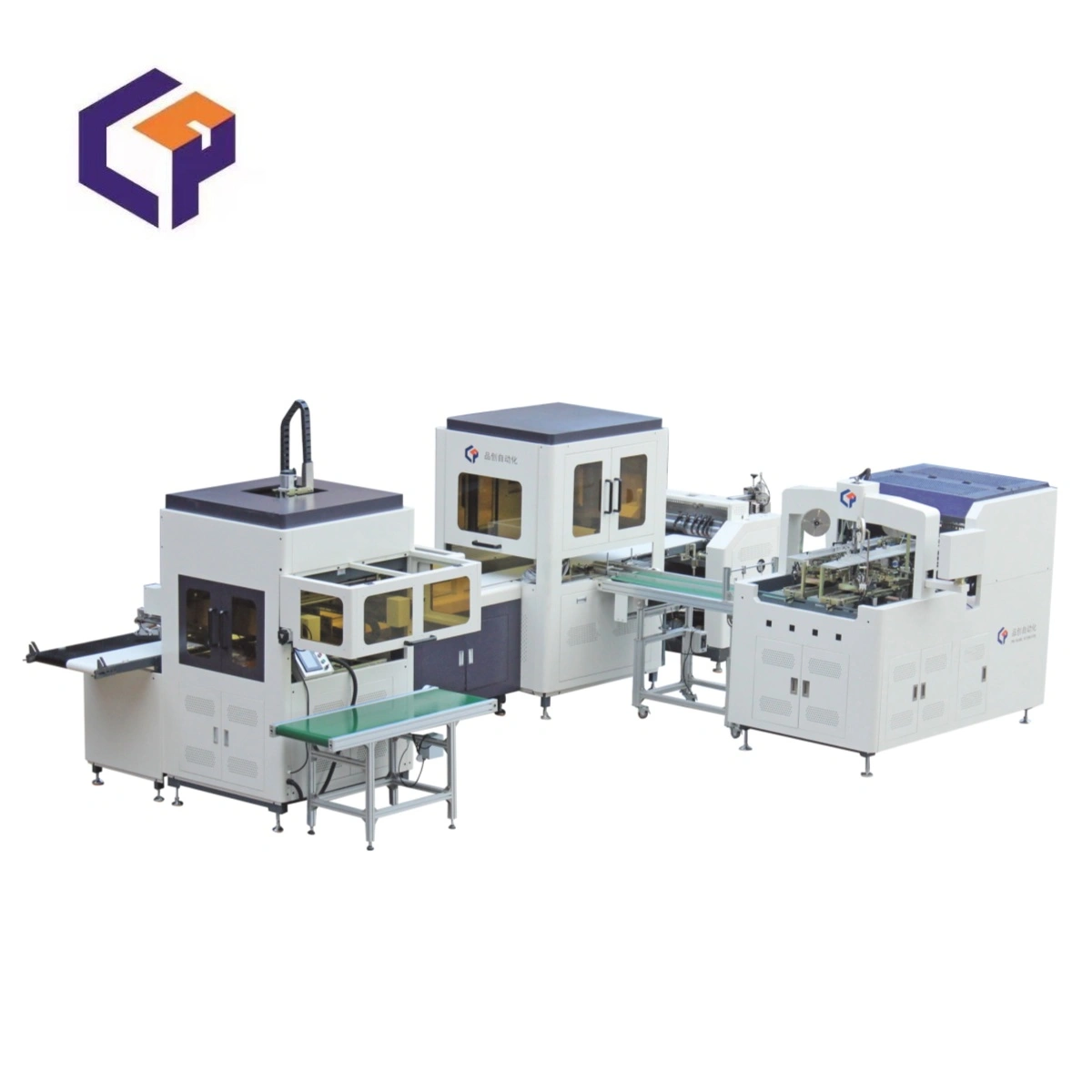
In the luxury packaging industry, efficiency, precision, and consistent quality are critical for brand perception. Traditionally, rigid boxes were manufactured manually, which required skilled labor, meticulous attention, and considerable time. While manual production allows for craftsmanship, it often falls short in speed, accuracy, and scalability. Today, the automatic rigid box machine has transformed the production landscape, offering a modern, high-efficiency alternative that combines automation, precision, and repeatable quality.
The main distinction between automatic machines and traditional methods lies in the level of mechanization. Traditional box-making relies on workers to cut, fold, paste, and assemble paperboard manually. While this method can produce customized or artisanal designs, it is prone to inconsistencies, errors, and slower output. In contrast, automatic rigid box machines integrate feeding, scoring, gluing, and assembly into a continuous process, delivering uniform boxes at higher production speeds with minimal human intervention.
Operational Differences Between Automatic and Manual Methods
Manual rigid box production involves several stages, each requiring careful execution. Workers must measure and cut the paperboard, score fold lines, apply adhesive accurately, and assemble the box. Even experienced operators can face challenges such as misaligned folds, uneven glue application, or inconsistent corner pressing. These inconsistencies can affect the box’s structural integrity and visual appeal, especially for high-end products where perfection is expected.
On the other hand, an automatic rigid box machine automates each step. Sheets are fed into the system by conveyors or rollers, scored precisely by mechanical tools, and glued with controlled adhesive dispensers. The assembly unit folds and presses the box corners consistently, producing uniform dimensions and flawless finishes. Modern machines may include hot-melt or cold-glue systems, programmable settings, and visual positioning systems to handle complex designs efficiently. This automation significantly reduces the likelihood of human error and improves repeatability across thousands of units.
Efficiency and Production Speed
One of the most significant advantages of using an automatic rigid box machine over traditional methods is efficiency. Manual production is labor-intensive and time-consuming. Even with a team of skilled workers, producing large volumes of boxes can take days or weeks, depending on the complexity of the design and material thickness. This can delay product launches and increase labor costs.
Automatic machines can produce hundreds to thousands of boxes per hour, depending on the model and configuration. By eliminating repetitive manual steps, manufacturers can scale production without hiring additional labor. Continuous operation ensures that deadlines are met, and production schedules remain predictable. This increased efficiency is particularly crucial for companies handling seasonal demands, bulk orders, or high-volume luxury packaging, where speed and precision are equally important.
Quality and Consistency
Quality consistency is another critical factor that sets automatic rigid box machines apart from traditional production methods. Manual processes are inherently variable. Even with careful oversight, subtle differences in folding angles, glue amounts, or corner pressing can lead to imperfections, resulting in rejected boxes or customer dissatisfaction.
Automatic machines maintain uniformity through programmed operations. Precise scoring, folding, and gluing ensure that each box meets strict dimensional and structural standards. Advanced machines can detect misfeeds, adjust fold pressure, or regulate glue application in real time, reducing errors. For premium packaging, this means every box appears flawless, reinforcing brand reputation and product value. Companies investing in automation gain not only efficiency but also reliability in producing consistent, high-quality packaging.
Cost Considerations
At first glance, manual production may seem less expensive because it requires minimal equipment. However, hidden costs such as labor, training, material waste, and slower production can outweigh initial savings. Errors in manual assembly often lead to material wastage, rework, or delays, impacting overall profitability.
Investing in an automatic rigid box machine entails higher upfront costs, but it provides long-term savings. Reduced labor dependency, lower material waste, and faster production contribute to cost efficiency over time. Additionally, automatic machines enable manufacturers to handle larger volumes and diversify box designs without additional workforce, ultimately delivering better ROI. Companies focused on high-end packaging benefit from improved quality, productivity, and operational predictability.
Flexibility and Adaptability
While traditional methods allow manual customization, automatic rigid box machines offer a different kind of flexibility. Modern machines support variable box dimensions, material thicknesses, adhesive types, and folding styles. By adjusting settings or swapping modular tooling, operators can produce multiple box designs on the same machine with minimal downtime.
This adaptability is especially valuable for luxury packaging, where limited-edition designs, seasonal products, or specialized boxes are common. Manufacturers can quickly switch production lines to accommodate different products, maintain consistent quality, and meet diverse client requirements. Flexibility, combined with speed and accuracy, gives automatic machines a clear advantage over manual production in dynamic market conditions.
Integration with Packaging Lines
Automatic rigid box machines are designed to integrate seamlessly with other packaging equipment, such as automatic corner pasting machines, paper gluing machines, or box assembly lines. Integrated systems enable a continuous, automated workflow from paperboard feeding to fully assembled boxes ready for shipment.
This integration minimizes human intervention, reduces bottlenecks, and supports synchronized production across multiple processes. For large-scale operations, this connectivity ensures that production lines operate at maximum efficiency while maintaining consistent quality standards. Companies adopting such integrated solutions can optimize workflow, shorten lead times, and enhance overall packaging capacity.
About Our Company and Solutions
Dongguan Pinchuang Automation Equipment Co., Ltd. is a leading manufacturer of advanced packaging machinery, specializing in automatic rigid box machines. Our solutions are engineered for precision, efficiency, and consistent quality, making them ideal for high-end packaging industries such as cosmetics, electronics, luxury gifts, and retail products.
In addition to rigid box machines, our company offers complementary equipment including automatic corner pasting machines, paper gluing machines, and complete box assembly lines. With over a decade of experience, we provide customized solutions, technical support, and training to help clients optimize production, reduce labor costs, and maintain high-quality standards. Our commitment to innovation and reliability ensures that your packaging operations remain competitive and productive.
FAQ
Q1: What is an automatic rigid box machine?
An automatic rigid box machine is a fully automated device that folds, glues, and assembles rigid boxes with high precision, ensuring consistent quality and efficiency compared to traditional manual methods.
Q2: How does it differ from traditional production methods?
Unlike manual assembly, which is labor-intensive and prone to errors, an automatic rigid box machine automates feeding, folding, gluing, and pressing for uniform, high-speed production.
Q3: What types of products benefit from automatic rigid box machines?
Luxury items such as cosmetics, electronics, premium gifts, jewelry, and retail packaging benefit from the efficiency, precision, and consistent quality these machines provide.
Q4: Are automatic rigid box machines cost-effective?
Yes, although they require higher initial investment, automatic machines save costs over time by reducing labor, minimizing material waste, and increasing production efficiency.
Q5: Can automatic rigid box machines be customized?
Modern machines allow adjustable box dimensions, material thickness, glue types, and folding patterns, offering flexibility for various designs and packaging requirements.