

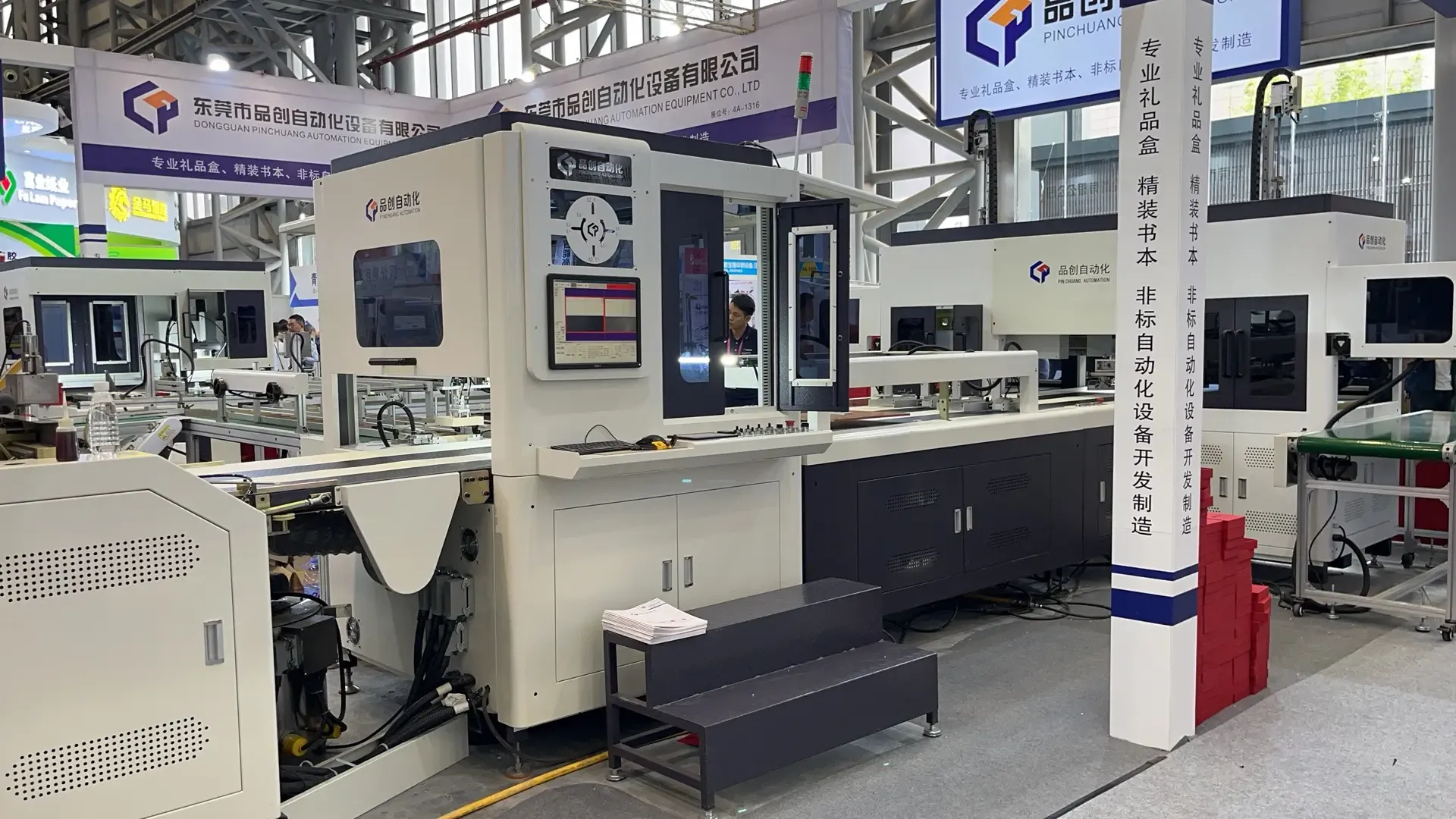
In rigid box manufacturing, precision is key. Even minor misalignment in components or decorations can compromise the overall quality and appearance of a box, particularly in luxury packaging. An automatic visual positioning machine has emerged as a game-changing solution, enabling manufacturers to align, inspect, and assemble components with exceptional accuracy and speed.
This guide explains how to select the most suitable automatic visual positioning machine for rigid box production. We will explore key factors such as alignment accuracy, compatibility with different box sizes, integration capabilities, speed, and technical support. Understanding these factors ensures that manufacturers achieve high-quality results, minimize waste, and optimize production efficiency while keeping labor costs under control.
1. Assess Alignment Accuracy Requirements
The primary function of an automatic visual positioning machine is to ensure precise alignment of box components, decorations, and inserts. Before selecting a machine, it is essential to evaluate the level of accuracy required for your production. Luxury rigid boxes often demand sub-millimeter alignment, while simpler boxes may tolerate slightly wider tolerances.
High-precision machines utilize advanced cameras, sensors, and software algorithms to detect exact positions and correct deviations in real time. Features such as automatic calibration, image recognition, and multi-point inspection allow operators to maintain consistent alignment across hundreds of boxes per hour. Selecting a machine with the right accuracy specifications ensures that your packaging meets quality standards, reduces errors, and enhances the visual appeal of finished products.
2. Consider Box Size and Material Compatibility
Rigid box production involves a wide range of materials, from thick paperboards to laminated sheets, and box sizes can vary from compact cosmetic boxes to large gift boxes. Not all automatic visual positioning machines handle these variations effectively.
When evaluating machines, consider the maximum and minimum box dimensions they can accommodate. Also, check whether the system can work with the materials you use without causing surface damage or alignment errors. Machines with adjustable clamps, flexible feeding mechanisms, and adaptable vision systems provide greater versatility. Ensuring compatibility allows manufacturers to switch between different product lines without requiring extensive adjustments, which saves time and reduces production downtime.
3. Evaluate Speed and Production Capacity
Production efficiency is a key factor in selecting an automatic visual positioning machine. High-volume production lines demand machines capable of inspecting and aligning multiple boxes per minute while maintaining accuracy.
Speed depends on factors such as camera frame rate, software processing capability, and mechanical handling efficiency. Machines with optimized vision algorithms and automated feeding systems can process hundreds of units per hour, significantly improving overall workflow. When selecting a machine, consider your typical production volume and future scalability requirements. Investing in a machine with sufficient capacity ensures that your packaging line remains efficient even as order volumes increase.
4. Integration with Existing Packaging Lines
An effective automatic visual positioning machine should integrate seamlessly with other packaging equipment, including box folding, corner pasting, paper gluing, and assembly machines.
Integration involves both physical alignment on the production floor and software communication between machines. Modern systems often feature programmable logic controllers (PLC) or Industry 4.0-compatible interfaces, allowing synchronization with upstream and downstream equipment. Seamless integration minimizes manual intervention, reduces bottlenecks, and ensures consistent throughput. When selecting a machine, check compatibility with your current line and whether the supplier offers integration support to optimize overall production performance.
5. User-Friendly Operation and Software Support
Operating an automatic visual positioning machine requires specialized software to program alignment patterns, adjust tolerances, and monitor performance. Choosing a machine with an intuitive interface reduces the learning curve for operators and allows for faster adjustments during production.
Look for features such as touchscreens, visual guides, automated calibration, and remote monitoring. These features enable operators to manage complex tasks without extensive training. Additionally, consider the supplier’s software support and training programs. Reliable technical support ensures that any software issues or updates do not disrupt production, making the machine a more sustainable long-term investment.
6. Maintenance, Durability, and Safety Considerations
Selecting an automatic visual positioning machine also involves evaluating maintenance requirements and machine durability. Machines with high-quality components, easy-access parts, and modular designs reduce downtime and simplify repairs.
Safety is another critical aspect. Machines should include emergency stop functions, protective covers, and sensors to prevent accidents. Regular maintenance schedules, supported by the manufacturer, ensure consistent performance and extend the machine’s lifespan. Prioritizing durability and safety protects your investment and maintains a productive, secure workplace.
Our Company and Solutions
Dongguan Pinchuang Automation Equipment Co., Ltd. provides state-of-the-art automatic visual positioning machines and related packaging solutions. Our equipment is designed for precision, speed, and seamless integration with rigid box production lines.
We offer customizable options to accommodate different box sizes, materials, and production capacities. Clients benefit from expert consultation, technical training, and ongoing support to optimize machine performance. By incorporating our automatic visual positioning machines into your production line, manufacturers can reduce errors, improve quality, and maintain consistent, high-end packaging standards.
FAQ
Q1: What is an automatic visual positioning machine?
An automatic visual positioning machine uses cameras and sensors to detect and align components during rigid box production, ensuring precise positioning and consistent quality.
Q2: How does it differ from manual positioning?
Manual positioning relies on operator skill, which can lead to inconsistencies. Automatic visual positioning machines provide repeatable, precise alignment and reduce labor dependency.
Q3: What factors should I consider when selecting one?
Key considerations include alignment accuracy, box size and material compatibility, speed and production capacity, integration capabilities, software usability, and maintenance requirements.
Q4: Can it handle different box sizes and materials?
Yes. Modern machines are designed to accommodate various box dimensions and paperboard types, including thick, laminated, or coated materials.
Q5: Is it cost-effective for high-volume production?
Absolutely. While the initial investment is higher, automatic visual positioning machines reduce labor, minimize errors, and improve efficiency, leading to long-term cost savings.