

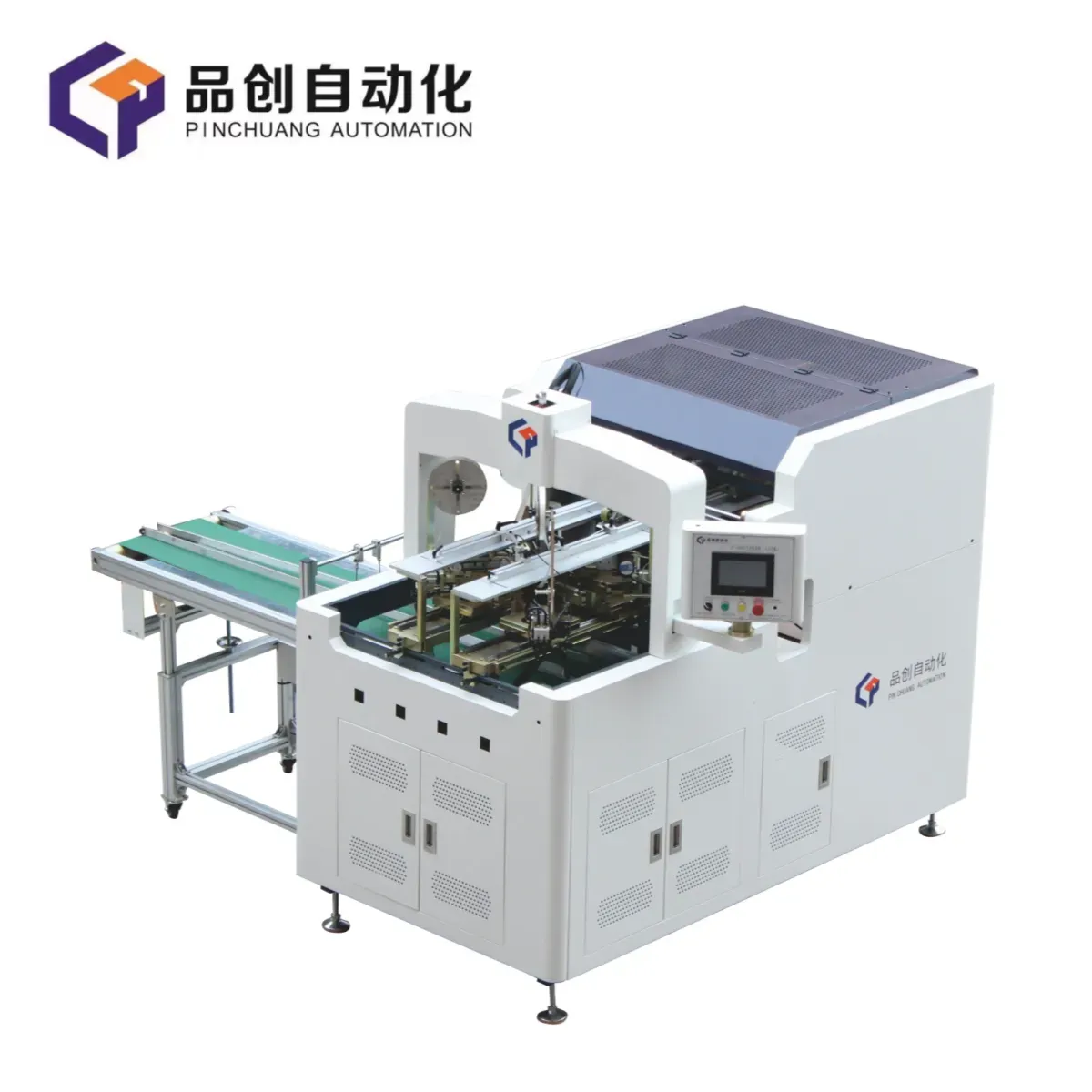
In the competitive landscape of premium packaging and bookbinding, the transition from manual craftsmanship to automated precision is no longer optional. A high-performance hard cover making machine stands as the cornerstone of modern production lines, bridging the gap between artistic quality and industrial efficiency.
The Evolution of Hardcover Production
The demand for luxury rigid boxes, high-end notebooks, and premium book covers has surged globally. Brands now require packaging that reflects the prestige of their products, which puts immense pressure on manufacturers to deliver flawless covers at scale. Traditional methods often suffer from glue inconsistency, misalignment, and slow turnaround times. This is where the integration of an advanced hard cover making machine transforms the manufacturing landscape.
By automating the complex steps of gluing, positioning, and folding, these machines ensure that every cover produced meets a rigorous standard of excellence. Whether you are producing a limited edition coffee table book or thousands of gift boxes for a luxury brand, the consistency provided by automation is the primary driver of customer satisfaction and brand loyalty.
Investment in this technology does not just replace labor; it enhances the creative possibilities of your production line. With the ability to handle various materials and complex dimensions, a modern machine allows for versatility that manual processes simply cannot match in a cost-effective manner.
Maximizing Precision with Visual Positioning Systems
One of the most significant hurdles in cover making is the precise alignment of the greyboard onto the glued surface paper. Even a one-millimeter deviation can result in a rejected product. High-end hard cover making machine solutions now incorporate visual positioning technology, often utilizing high-resolution cameras and robotic arms to achieve microscopic accuracy.
Key Advantages of Intelligent Positioning:
- Reduced material waste through exact placement.
- Elimination of human error in high-speed operations.
- Seamless integration with YAMAHA robot arms for 24/7 reliability.
This level of precision ensures that the corners are sharp, the edges are flush, and the overall aesthetic is professional. For industries like electronics and cosmetics, where the unboxing experience is part of the product's value proposition, these technical details are paramount.
How Automation Boosts Production Throughput
Production speed is the lifeblood of a profitable manufacturing facility. A manual worker may produce a few covers per minute, whereas a fully automatic hard cover making machine can produce between 20 to 35 pieces per minute, depending on the complexity and size. This exponential increase in output allows manufacturers to take on larger contracts and meet tighter deadlines without increasing headcount.
The efficiency is not just found in the raw speed of the machine but also in the reduction of secondary processes. Modern machines handle four-side wrapping and folding in a single pass. This continuous workflow prevents bottlenecks that typically occur when moving semi-finished goods between different stations.
Furthermore, the rapid changeover capabilities of digital control systems mean that switching between different box sizes or cover designs takes minutes rather than hours. This agility is crucial for manufacturers dealing with diverse product portfolios and small-batch custom orders.
Ensuring Consistent Glue Application and Finishing
A common quality issue in hardcover production is "bubbling" or "peeling," often caused by uneven glue application or improper pressing. A professional hard cover making machine utilizes sophisticated gluing systems that maintain a consistent temperature and thickness of the adhesive. This ensures a perfect bond across the entire surface area of the cover.
The final pressing stage is equally critical. Controlled pneumatic or hydraulic pressure is applied to the finished cover to remove air pockets and ensure that the paper is tightly adhered to the board. This results in a smooth, durable finish that resists warping and environmental factors like humidity.
By digitizing these parameters, manufacturers can save specific "recipes" for different materials, ensuring that the same high quality is achieved every time a specific job is rerun. This level of repeatability is the hallmark of a world-class production facility.
Why Pinchuang is Your Ideal Technology Partner
As a leading innovator in the packaging industry, Pinchuang has dedicated years to perfecting the automation of rigid box and cover production. Our commitment to Research and Development has resulted in a suite of machinery that leads the industry in both precision and durability. We understand that your success depends on the reliability of your equipment.
Our flagship hard cover making machine solutions, such as the PC-450 series, are designed for high-speed operation with minimal maintenance. These machines are engineered to handle a wide range of sizes, making them perfect for everything from small jewelry boxes to large hardcover book casings.
By choosing Pinchuang, you benefit from:
- Expert Engineering: Machines built with globally sourced components for long-term stability.
- Comprehensive Support: From installation to operator training and after-sales service.
- Innovative Solutions: Specialized equipment like our four-side wrapping machine for complex finishing needs.
We invite you to explore our full range of automatic rigid box making machines to see how we can revolutionize your production floor.
Frequently Asked Questions
Q1: What is the average ROI for a new hard cover making machine?
Most of our clients see a full return on investment within 12 to 18 months. This is achieved through a 70% reduction in manual labor costs, a significant decrease in material waste, and the ability to fulfill high-volume orders that were previously impossible to handle.
Q2: Can your hard cover making machine handle specialized materials like leather or cloth?
Yes, Pinchuang machines are designed with versatile gluing and feeding systems. Whether you are using standard coated paper, synthetic leather, or textured fabrics, our machines provide adjustable settings to ensure proper adhesion and folding without damaging the delicate surface materials.
Q3: How difficult is it to train operators on an automatic hard cover making machine?
Our machines feature an intuitive touch-screen interface (HMI) available in multiple languages. A typical operator with basic mechanical knowledge can be fully trained to operate and perform routine maintenance on the machine within 3 to 5 days of hands-on instruction.
Q4: What maintenance is required to keep a hard cover making machine running at peak speed?
Regular maintenance involves daily cleaning of the gluing rollers, weekly lubrication of moving parts, and monthly inspections of the vacuum system and sensors. Pinchuang provides a detailed maintenance schedule and easy access to spare parts to ensure minimal downtime.
Q5: Does the hard cover making machine support custom sizes for boutique packaging?
Absolutely. One of the core strengths of our equipment is the flexible size adjustment. Our machines can be quickly reconfigured to handle different board thicknesses and cover dimensions, making them ideal for both mass production and bespoke luxury packaging projects.
Ready to Elevate Your Production?
Don't let outdated processes hold back your business growth. Join the leaders in the packaging industry who trust Pinchuang for their automation needs.