

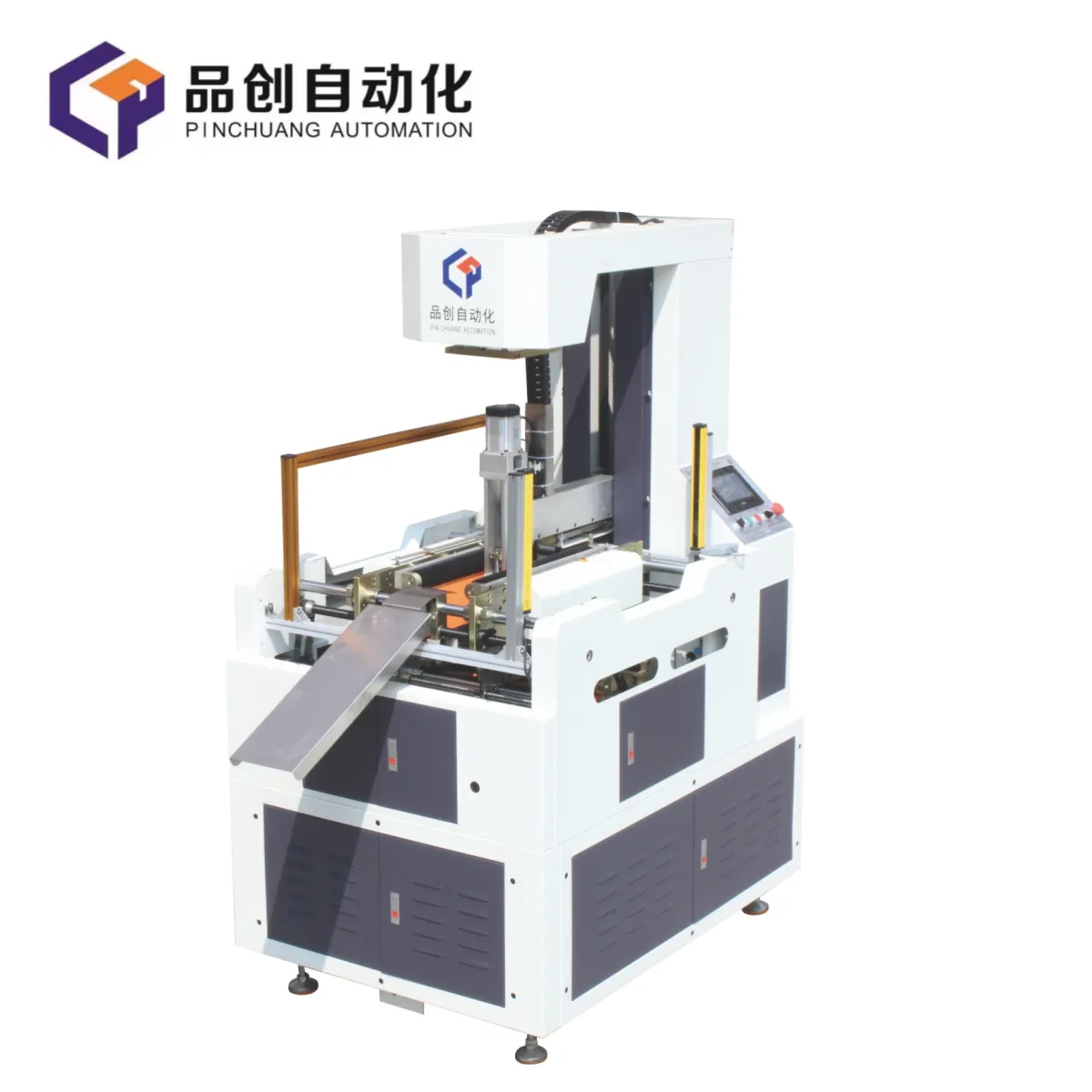
Selecting the right equipment is a critical decision for any packaging manufacturer. In rigid box production, the forming stage directly affects the final product’s shape, durability, and visual appeal. A rigid box forming machine is responsible for shaping and assembling the box after processes such as V grooving, positioning, and gluing. Choosing the right machine ensures that your factory achieves consistent quality, high efficiency, and optimal production output.
However, not all machines are the same. Different factories have different production scales, material requirements, and product specifications. Selecting the wrong machine can lead to inefficiencies, increased costs, and inconsistent product quality. This guide provides a comprehensive overview of the key factors to consider when choosing a rigid box forming machine, helping you make an informed decision that aligns with your production goals.
Understand Your Production Requirements
Before investing in a rigid box forming machine, it is essential to evaluate your factory’s production needs. This includes the type of boxes you manufacture, the volume of production, and the materials used. For example, luxury packaging often requires high precision and flawless finishing, while industrial packaging may prioritize durability and speed.
Consider the dimensions and complexity of your boxes. Some machines are designed for standard box sizes, while others can handle a wide range of dimensions and styles. Additionally, think about production volume. High-volume factories require machines with continuous operation capabilities and high output rates, whereas smaller operations may prioritize flexibility over speed.
Understanding your production requirements ensures that you select a machine that meets your operational needs without over-investing in unnecessary features or underestimating your capacity requirements.
Evaluate Machine Automation Level
Automation is one of the most important factors when selecting a rigid box forming machine. Fully automatic machines can perform feeding, forming, pressing, and ejection processes with minimal human intervention, significantly improving efficiency and consistency.
Semi-automatic machines, on the other hand, require more manual input, which can slow down production and increase labor costs. While they may have a lower upfront cost, they are less suitable for high-volume production.
A fully automatic rigid box forming machine ensures consistent pressure application, accurate folding, and precise shaping. It reduces human error and improves overall production quality. When choosing a machine, consider your labor availability, production targets, and long-term growth plans. Investing in higher automation can provide significant advantages in efficiency and scalability.
Check Compatibility with Materials and Box Types
Different packaging products require different materials, including greyboard, laminated paper, and specialty coatings. A reliable rigid box forming machine must be capable of handling these materials without damaging them or compromising the final product quality.
Check whether the machine can accommodate various material thicknesses and densities. Some machines are designed specifically for thin boards, while others can handle thicker, more rigid materials. Additionally, consider the types of boxes you produce, such as lid-and-base boxes, book-style boxes, or custom shapes.
Machines with adjustable settings and flexible tooling provide greater versatility, allowing you to produce different box types without extensive modifications. This adaptability is particularly valuable for manufacturers offering customized packaging solutions.
Assess Precision and Quality Output
Precision is a key factor in rigid box production. A high-quality rigid box forming machine ensures accurate folding, tight corner formation, and uniform shape. Poorly formed boxes can lead to customer dissatisfaction and increased rejection rates.
Look for machines with advanced control systems that allow precise adjustments to forming pressure, folding angles, and alignment. Consistent quality is especially important for luxury packaging, where even minor imperfections can affect brand perception.
Modern machines often include sensors and monitoring systems that detect errors during production, ensuring that only high-quality boxes proceed to the next stage. By prioritizing precision, manufacturers can maintain high standards and reduce waste.
Consider Production Speed and Efficiency
Production speed directly impacts your factory’s output and profitability. A rigid box forming machine with high-speed capabilities allows you to meet large orders and tight deadlines.
Evaluate the machine’s cycle time and output rate. High-speed machines can produce hundreds or even thousands of boxes per hour, depending on the model and configuration. However, speed should not come at the expense of quality.
Efficient machines balance speed with precision, ensuring consistent results at high production rates. Additionally, consider features such as automatic feeding and quick changeover systems, which reduce downtime and improve overall efficiency. Choosing a machine that aligns with your production goals ensures optimal performance and cost-effectiveness.
Integration with Your Existing Production Line
A modern packaging factory typically uses multiple machines for processes such as V grooving, positioning, gluing, and forming. When selecting a rigid box forming machine, it is important to ensure that it integrates seamlessly with your existing equipment.
Integration improves workflow efficiency by reducing manual handling and minimizing production delays. Machines with compatible interfaces and synchronized operation capabilities allow for smooth transitions between different stages of production.
For example, a forming machine that works well with an automatic visual positioning machine ensures accurate alignment before forming, resulting in higher-quality boxes. Investing in integrated systems enhances productivity and simplifies production management.
Maintenance, Durability, and After-Sales Support
A rigid box forming machine is a long-term investment, so durability and maintenance requirements should be carefully considered. Machines with high-quality components, robust construction, and reliable performance reduce the risk of breakdowns and production interruptions.
Easy maintenance features, such as accessible components and automated lubrication systems, help minimize downtime. Additionally, consider the manufacturer’s after-sales support, including technical assistance, spare parts availability, and training services.
Reliable support ensures that any issues are resolved quickly, keeping your production line running smoothly. Choosing a reputable supplier with strong service capabilities is just as important as selecting the right machine.
Our Company and Solutions
Dongguan Pinchuang Automation Equipment Co., Ltd. is a professional manufacturer of advanced packaging machinery, specializing in high-performance rigid box forming machines. Our machines are designed to deliver precision, efficiency, and reliability for both small-scale and large-scale production.
We offer a complete range of solutions, including automatic rigid box machines, V grooving machines, automatic visual positioning machines, corner pasting machines, and paper gluing machines. Our equipment is engineered for seamless integration, allowing manufacturers to build efficient, fully automated production lines.
With extensive industry experience, we provide customized machine solutions, technical support, and operator training to help clients optimize production. By choosing our rigid box forming machines, factories can improve productivity, reduce costs, and consistently produce high-quality packaging products.
FAQ
Q1: What is a rigid box forming machine?
A rigid box forming machine is a device used to shape and assemble rigid boxes by folding and pressing materials into the final box structure.
Q2: How do I choose the right rigid box forming machine?
Consider factors such as production volume, material compatibility, automation level, precision, speed, and integration with existing equipment.
Q3: Why is automation important in a rigid box forming machine?
Automation improves efficiency, reduces labor costs, ensures consistent quality, and allows for high-volume production with minimal errors.
Q4: Can one machine handle different box types?
Yes, many modern rigid box forming machines are designed with adjustable settings to accommodate various box sizes, shapes, and materials.
Q5: Is a rigid box forming machine suitable for small factories?
Yes, both semi-automatic and fully automatic models are available, allowing small factories to choose machines that fit their production scale and budget.