

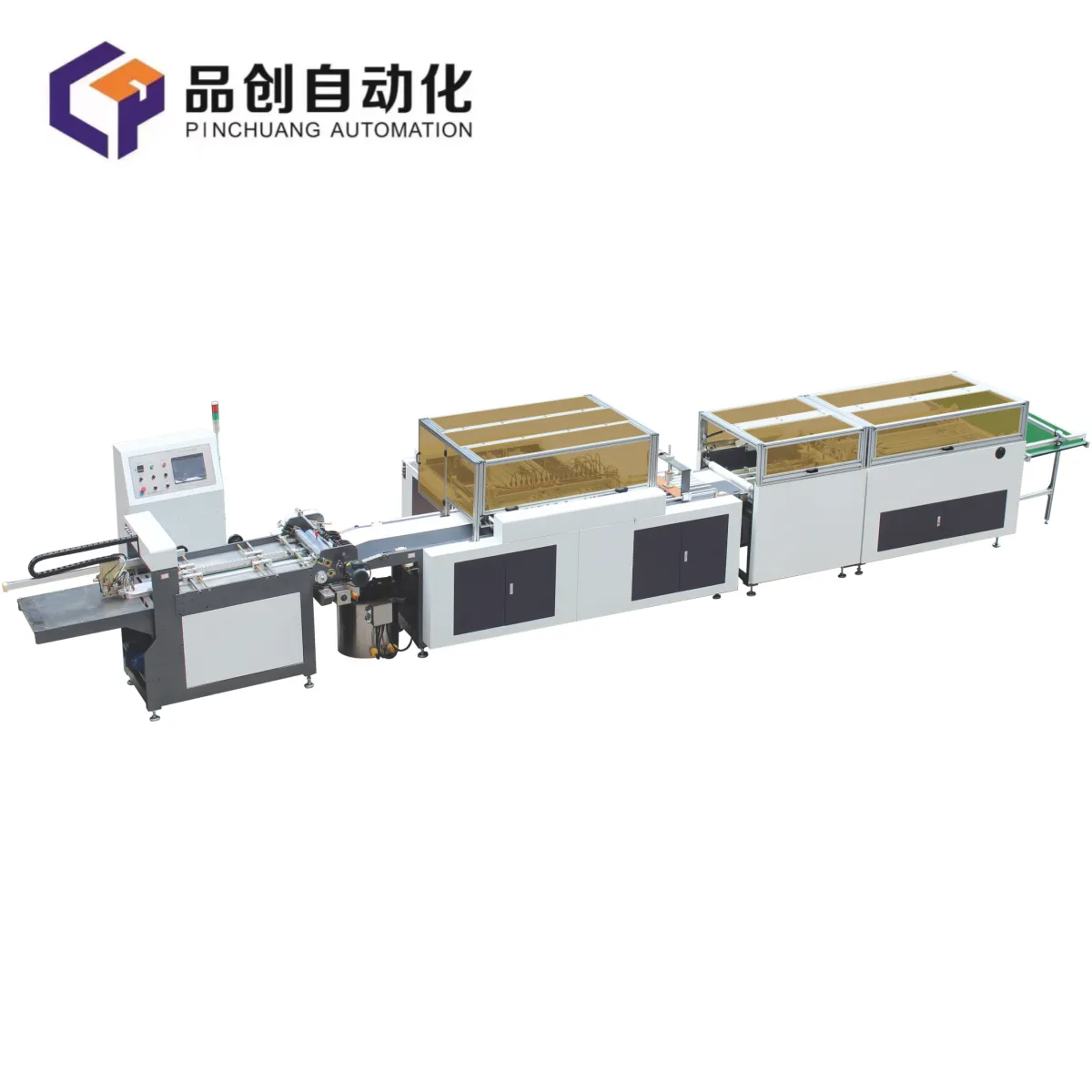
A comprehensive guide to selecting high-precision equipment for luxury packaging and hardcover production.
Introduction to Advanced Packaging Automation
In the competitive world of premium packaging, the quality of a finished product often depends on the precision of the machinery used in its creation. For manufacturers producing luxury gift boxes, book covers, or high-end stationery, investing in an automatic case making machine is a strategic move to ensure consistency and scale. However, not all machines are created equal.
The transition from manual or semi-automatic processes to fully automated systems requires a deep understanding of technical specifications and operational requirements. Selecting the right equipment involves more than just comparing prices; it involves evaluating how the technology integrates into your existing workflow and its ability to handle diverse materials.
Pinchuang has established itself as a leader in this sector, providing innovative solutions that bridge the gap between high-speed output and artisan-level quality. This guide will walk you through the essential factors to consider before making a purchase.
How Important Is Production Speed and Stability?
The primary reason to invest in an automatic case making machine is to increase throughput. You must evaluate the rated speed of the machine, usually measured in pieces per minute. However, speed should never come at the cost of stability.
A machine that runs fast but frequently jams or produces errors will ultimately lower your ROI. Look for equipment that utilizes high-quality servo motors and robust mechanical frames. Stability ensures that even during long production shifts, the quality of the case remains uniform.
At Pinchuang, our machines are designed to maintain peak performance without compromising the delicate nature of the paper or cardboard being processed.
Precision and Visual Positioning Systems
One of the most critical aspects of modern case making is the accuracy of the paper-to-board placement. Traditional mechanical positioning can sometimes result in slight deviations. To combat this, look for machines equipped with advanced visual positioning technology.
Systems that incorporate high-resolution cameras and industrial-grade controllers, such as YAMAHA visual positioning systems, allow for real-time adjustments. This ensures that every cover is perfectly centered, which is vital for luxury brands where a 1mm error can lead to a rejected batch.
The integration of these technologies significantly reduces waste and ensures that the automatic case making machine delivers a professional finish every time.
Material Versatility and Glue Management
A versatile machine should be able to handle a wide range of paper weights and cardboard thicknesses. Whether you are working with thin decorative papers or heavy industrial boards, the machine’s feeding and gluing systems must be adaptable.
- Gluing Systems: Ensure the machine offers precise glue thickness control to prevent warping or seeping.
- Heating Units: Look for intelligent temperature control for hot-melt glues, which ensures consistent tackiness regardless of ambient room temperature.
- Size Range: Check the minimum and maximum dimensions the machine can produce to cover your entire product portfolio.
Operational Ease and Changeover Efficiency
In a modern factory, downtime is expensive. An automatic case making machine should be user-friendly, featuring an intuitive PLC (Programmable Logic Controller) interface. Touchscreens with multi-language support and job memory functions are essential for rapid setups.
When switching between different box sizes or cover designs, the "changeover time" is a key metric. High-end machines offer semi-automatic or fully automatic adjustments, reducing the need for manual tool changes. This allows your operators to focus on quality control rather than mechanical troubleshooting.
Furthermore, consider the safety features. Emergency stop buttons, light curtains, and protective enclosures are mandatory to protect your workforce while the machine operates at high speeds.
Why Pinchuang is Your Ideal Manufacturing Partner
At Pinchuang, we specialize in high-precision packaging automation. Our commitment to innovation is reflected in our extensive range of products designed to meet the rigorous demands of the global packaging market. We understand that purchasing an automatic case making machine is a major investment, which is why we focus on durability and advanced technology.
Our automatic case making machine with YAMAHA visual positioning is a testament to our engineering excellence, offering unparalleled accuracy for rigid box production. Beyond just hardware, we provide comprehensive technical support and consultation to ensure our equipment drives your business growth.
From our headquarters, we serve clients worldwide, ensuring that every automatic case making machine leaving our facility meets the highest international standards of quality and safety.
Conclusion
Choosing the right automatic case making machine requires a balance of speed, precision, and flexibility. By focusing on visual positioning systems, material compatibility, and operational ease, you can ensure that your production line remains competitive and capable of delivering high-quality results. Partnering with a reputable manufacturer like Pinchuang ensures that you receive not only a machine but a complete production solution.
Frequently Asked Questions
Q1: What is the average lifespan of an automatic case making machine from Pinchuang?
With proper maintenance and original spare parts, our machines are built to last over 10-15 years. We use high-quality components from international brands to ensure long-term mechanical integrity and electronic reliability.
Q2: Can your automatic case making machine handle irregular shapes or specialized materials?
Yes, our equipment is highly adaptable. While standard cases are the most common, our systems can be adjusted for various sizes and material types. For extremely unique requirements, we offer customization services to modify the feeding and folding modules.
Q3: How much training is required to operate an automatic case making machine?
Thanks to our user-friendly PLC interfaces, a basic operator can learn to run the machine within a few days. We provide detailed manuals and on-site or remote training sessions to ensure your team is fully competent in operation and daily maintenance.
Q4: What kind of glue is recommended for use with the automatic case making machine?
Most of our machines are designed for jelly glue (hot melt), which is ideal for rigid box and case making due to its fast drying time and clean application. Our machines feature integrated heating and viscosity control systems to manage this effectively.
Q5: How does the visual positioning system improve the output of an automatic case making machine?
The visual positioning system uses cameras to identify the exact coordinates of the paper and board. It then communicates with the servo motors to align them perfectly before bonding. This eliminates the minor errors common in mechanical stoppers, resulting in a 99.9% accuracy rate.
Ready to Upgrade Your Production Line?
Contact our technical experts today to find the perfect machinery solution for your business.