

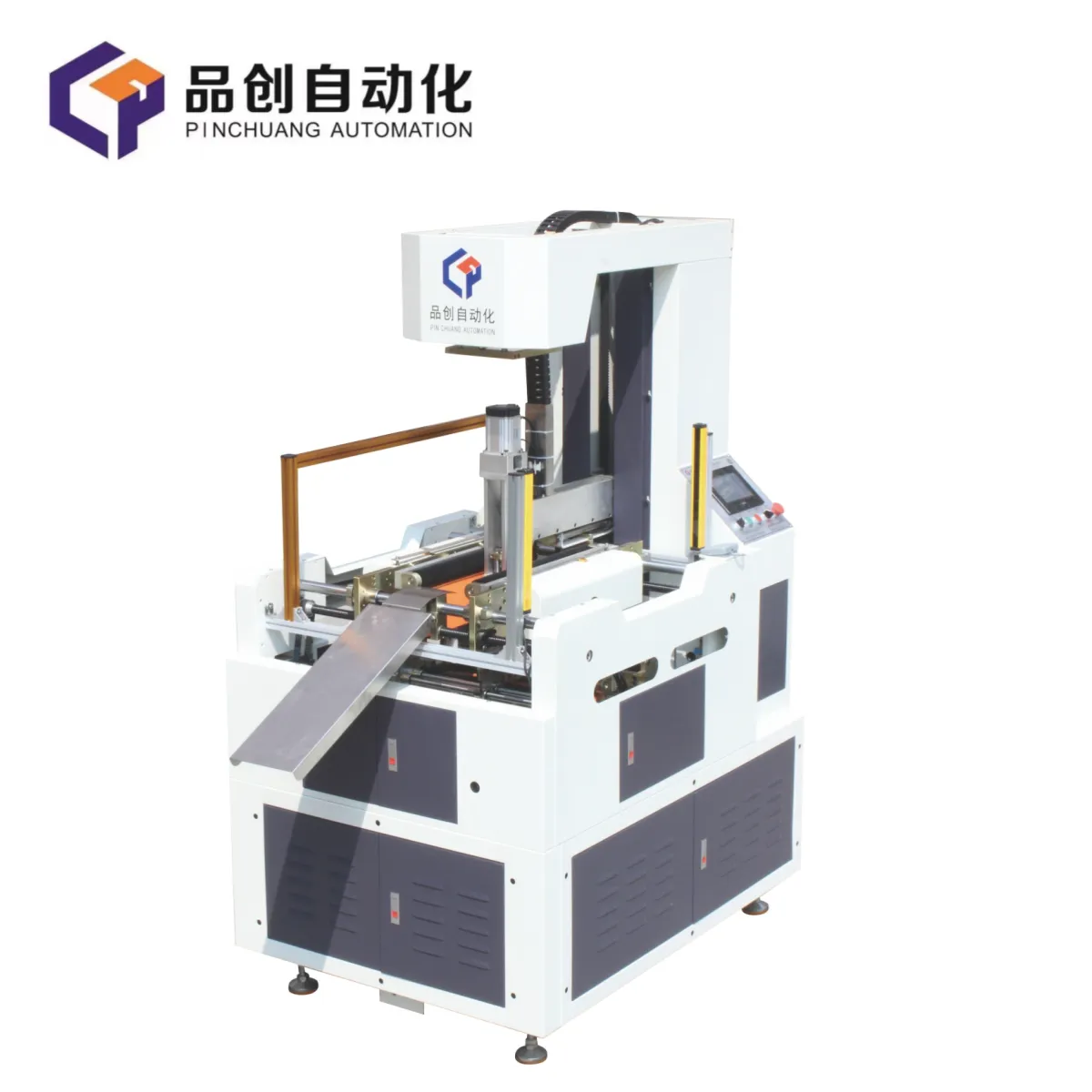
In the packaging industry, rigid boxes are widely used for premium products, where both structural integrity and visual quality are essential. Traditionally, these boxes were produced through manual processes, requiring skilled workers to fold, press, and assemble each box by hand. While this method offers flexibility, it often struggles to meet the growing demands for speed, consistency, and large-scale production.
With the advancement of automation, the rigid box forming machine has become a key solution for modern manufacturers. By automating the forming process, this machine improves efficiency, reduces labor dependency, and ensures consistent quality.
This article provides a detailed comparison between rigid box forming machines and manual box making, focusing on efficiency, precision, cost, and scalability. Understanding these differences helps manufacturers choose the most suitable production method for their business.
Manual Box Making: Flexibility with Limitations
Manual box making has long been the traditional approach in rigid box production. Skilled workers perform tasks such as folding greyboard, applying glue, and pressing the box into shape. This method allows for a high degree of flexibility, especially for small batches or customized designs.
However, manual processes come with significant limitations. Production speed is relatively slow, as each box requires individual attention. The quality of the final product depends heavily on the operator’s skill and experience, leading to inconsistencies in shape and finish. Fatigue and human error further increase the risk of defects, particularly during long production runs.
Additionally, manual box making is labor-intensive, requiring a large workforce to meet production demands. This increases operational costs and makes it difficult to scale production efficiently. While suitable for small-scale operations, manual methods struggle to keep up with modern packaging requirements.
Rigid Box Forming Machine: Automation and Efficiency
The rigid box forming machine represents a significant advancement in packaging production. It automates the forming process, including folding, pressing, and shaping, ensuring consistent results with minimal human intervention.
Unlike manual methods, the machine operates at high speed, producing a large number of boxes within a short time. Automated systems ensure precise alignment and uniform pressure, resulting in high-quality boxes with consistent dimensions and finishes.
The machine also reduces reliance on skilled labor. Operators are primarily responsible for monitoring and adjusting the system rather than performing repetitive tasks. This not only improves efficiency but also enhances workplace safety.
For manufacturers aiming to increase production capacity and maintain consistent quality, the rigid box forming machine provides a reliable and scalable solution.
Efficiency and Production Speed Comparison
Efficiency is one of the most significant differences between manual box making and the rigid box forming machine. Manual processes are inherently slow, as each step must be performed individually by workers. Even experienced operators can only produce a limited number of boxes per hour.
In contrast, a rigid box forming machine can operate continuously, producing hundreds or even thousands of boxes per hour, depending on the model. Automated feeding and forming systems eliminate downtime between operations, ensuring a smooth production flow.
This increase in speed allows manufacturers to meet large orders and tight deadlines more effectively. Faster production also reduces lead times, improving customer satisfaction and competitiveness in the market. Overall, the efficiency advantage of automated machines is a key factor driving their adoption in modern factories.
Quality and Precision Differences
Quality is another critical factor in comparing these two methods. Manual box making relies on human judgment, which can lead to variations in folding accuracy, corner tightness, and overall shape. These inconsistencies can affect the appearance and durability of the boxes.
The rigid box forming machine ensures consistent quality by using precise mechanical systems and controlled pressure. Every box is formed under the same conditions, resulting in uniform dimensions and high-quality finishes.
This level of precision is particularly important for luxury packaging, where even minor imperfections can impact brand perception. By eliminating variability, the machine helps manufacturers maintain high standards and reduce the risk of product rejection.
Cost Considerations and Return on Investment
Cost is a major consideration when choosing between manual and automated production methods. Manual box making has a lower initial investment but higher long-term costs due to labor, inefficiencies, and material waste.
The rigid box forming machine requires a higher upfront investment, but it offers significant cost savings over time. Reduced labor requirements, increased production efficiency, and lower defect rates contribute to a faster return on investment.
Additionally, automation allows manufacturers to scale production without proportionally increasing labor costs. This makes the rigid box forming machine a cost-effective solution for businesses looking to grow and remain competitive in the packaging industry.
Scalability and Future Growth
Scalability is essential for manufacturers aiming to expand their operations. Manual box making is difficult to scale, as increasing production requires hiring more workers and expanding workspace. This approach can quickly become inefficient and costly.
The rigid box forming machine offers excellent scalability. By increasing machine capacity or adding additional units, manufacturers can significantly boost production without major changes to their workforce.
Furthermore, automated machines can be integrated into complete production lines, working alongside V grooving machines, automatic visual positioning machines, and gluing systems. This integration creates a highly efficient workflow, supporting long-term growth and adaptability to changing market demands.
Our Company and Solutions
Dongguan Pinchuang Automation Equipment Co., Ltd. is a professional manufacturer of advanced packaging machinery, specializing in high-performance rigid box forming machines. Our machines are designed to deliver exceptional efficiency, precision, and reliability for modern packaging production.
We offer a full range of solutions, including automatic rigid box machines, V grooving machines, automatic visual positioning machines, corner pasting machines, and paper gluing machines. Our equipment is engineered for seamless integration, enabling manufacturers to build efficient and fully automated production lines.
With extensive industry experience, we provide customized solutions, technical support, and training services to help clients optimize their production processes. By choosing our rigid box forming machines, manufacturers can reduce costs, improve efficiency, and consistently produce high-quality packaging products.
FAQ
Q1: What is a rigid box forming machine?
A rigid box forming machine is a machine that automates the process of shaping and assembling rigid boxes, ensuring consistent quality and high production efficiency.
Q2: How does a rigid box forming machine compare to manual box making?
It offers faster production speed, higher precision, and reduced labor costs compared to manual methods, making it more suitable for large-scale manufacturing.
Q3: Why is a rigid box forming machine more efficient?
It automates repetitive tasks, operates continuously, and minimizes downtime, allowing for significantly higher output compared to manual processes.
Q4: Is manual box making still useful?
Yes, it can be suitable for small-scale production or highly customized designs, but it is less efficient for large-volume manufacturing.
Q5: Is investing in a rigid box forming machine worthwhile?
Yes, despite the higher initial cost, it provides long-term benefits such as increased productivity, reduced labor costs, and consistent product quality.