

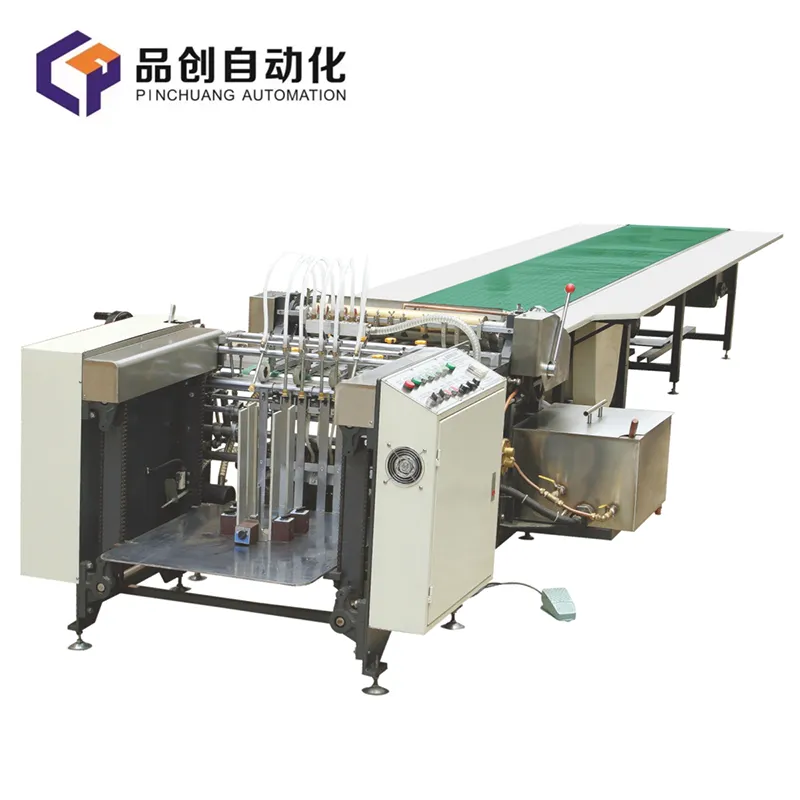
In modern packaging, precision, speed, and reliability are critical factors that determine the success of production lines. One of the most crucial steps in rigid box and carton manufacturing is gluing, which affects both product durability and appearance. Traditionally, paper gluing was performed manually, but this method is time-consuming, inconsistent, and labor-intensive. The automatic paper gluing machine has revolutionized this process, offering efficiency, consistency, and high-quality output.
Selecting the right automatic paper gluing machine is essential for manufacturers seeking to optimize production and reduce operational costs. This guide provides a comprehensive approach to choosing the best machine, covering machine types, key features, performance metrics, and practical considerations for packaging lines.
Understand Your Production Requirements
Before choosing an automatic paper gluing machine, it is critical to assess your production requirements. This includes the volume of boxes or cartons you plan to produce daily, the variety of sizes and shapes, and the type of materials used. Machines vary in their capacity, flexibility, and compatibility with different substrates, such as coated cardboard, laminated paperboard, or specialty papers.
High-volume production lines require machines with faster gluing speed, larger feeding capacity, and precise glue control systems. On the other hand, small-scale or specialized production may benefit from compact machines with easy adjustment features. Understanding your production goals ensures that the selected machine aligns with operational efficiency, quality standards, and cost expectations.
Additionally, consider integration with other packaging equipment, such as automatic box assembly machines, corner pasting machines, and case making machines. A well-integrated system reduces manual handling, improves workflow, and maximizes overall line efficiency.
Evaluate Key Features and Performance Metrics
When selecting an automatic paper gluing machine, focus on essential features that directly impact performance. One of the most critical elements is the glue application system. Advanced machines provide precise, adjustable glue dispensing, ensuring consistent coverage without excess or gaps. This consistency enhances product durability and reduces waste.
Feeding mechanisms, alignment units, and conveyor systems also play a significant role. Machines with automatic feeding and positioning reduce operator intervention and increase throughput. High-quality sensors and visual positioning systems ensure boxes are accurately aligned before glue application, minimizing errors and improving production reliability.
Other performance metrics to consider include machine speed (boxes per minute), ease of size adjustment, compatibility with different adhesives, and maintenance requirements. A machine with user-friendly controls, quick-change parts, and modular design will reduce downtime and improve long-term efficiency.
Consider Material Compatibility and Flexibility
Packaging materials vary widely, and the selected automatic paper gluing machine must be compatible with your product line. Some machines are optimized for thin paper or standard cardboard, while others can handle thicker laminated boards or specialty papers used in luxury packaging.
Flexibility in material handling allows manufacturers to adapt to changing market demands and produce a variety of box designs without significant reconfiguration. Adjustable glue volumes, pressure settings, and feeding systems are essential features that ensure consistent results across different materials.
Moreover, flexible machines allow for quick transitions between products, minimizing downtime and supporting multi-product lines. For manufacturers offering customized or seasonal packaging, this adaptability is a significant advantage, enabling high-quality output without compromising efficiency.
Assess Reliability, Maintenance, and Total Cost of Ownership
The total cost of ownership is a critical consideration when investing in an automatic paper gluing machine. While upfront costs may be higher than manual gluing or semi-automatic options, the long-term benefits often justify the investment.
Reliable machines minimize production downtime, reduce labor dependency, and ensure consistent quality, leading to lower material waste and rework costs. Maintenance requirements should be straightforward, including periodic cleaning, lubrication, and part replacements. Machines with modular designs and accessible components facilitate faster servicing and reduce operational interruptions.
In addition, consider energy efficiency and operational ergonomics. A machine designed for easy access, intuitive controls, and minimal operator strain improves workplace safety and overall productivity.
Integration with Modern Packaging Lines
For maximum efficiency, an automatic paper gluing machine should seamlessly integrate with other equipment in your packaging line. It can work in combination with automatic corner pasting machines, case making machines, and box assembly units to create a fully automated production line.
Integration allows for synchronized operation, faster production speeds, and reduced manual handling. Visual positioning systems, conveyors, and programmable settings enhance line coordination, ensuring smooth transitions from one process to another. A well-integrated machine setup reduces errors, improves quality control, and enables manufacturers to meet tight deadlines and high-volume orders with confidence.
About Our Company and Gluing Machine Solutions
Dongguan Pinchuang Automation Equipment Co., Ltd. is a leading provider of packaging automation solutions, specializing in high-performance machines designed for modern packaging lines. Our automatic paper gluing machines deliver precise adhesive application, consistent quality, and high-speed operation for rigid box and carton production.
In addition to paper gluing machines, we offer complementary equipment, including automatic corner pasting machines, box assembly machines, case making machines, and v grooving machines. Our solutions are widely adopted across industries such as luxury packaging, cosmetics, electronics, and gift boxes.
We provide technical support, customization options, and global service, helping manufacturers optimize production efficiency, reduce labor costs, and consistently deliver high-quality packaging solutions.
Conclusion
Selecting the right automatic paper gluing machine is essential for enhancing production efficiency, ensuring consistent quality, and optimizing packaging operations. By assessing production requirements, evaluating machine features, considering material compatibility, and examining total cost of ownership, manufacturers can make informed decisions that improve both operational performance and profitability.
Investing in an automatic paper gluing machine not only streamlines the gluing process but also supports sustainable, high-quality, and scalable packaging production.
FAQ
Q1: What is an automatic paper gluing machine?
An automatic paper gluing machine is a device that applies adhesive to boxes or cartons automatically, ensuring consistent coverage, precise folding, and high-quality output.
Q2: How does an automatic paper gluing machine improve production efficiency?
It automates repetitive tasks, reduces human error, and enables high-speed operation, allowing manufacturers to produce more boxes per hour with consistent quality.
Q3: Can an automatic paper gluing machine handle different types of paper or cardboard?
Yes, modern machines are flexible and adjustable to accommodate various paper thicknesses, coated boards, and laminated materials.
Q4: What factors should be considered when selecting a paper gluing machine?
Key factors include production volume, material compatibility, speed, precision, maintenance requirements, and integration with existing packaging lines.
Q5: Why should manufacturers invest in an automatic paper gluing machine?
It ensures consistent quality, reduces labor costs, minimizes material waste, and supports faster, more efficient packaging production.