

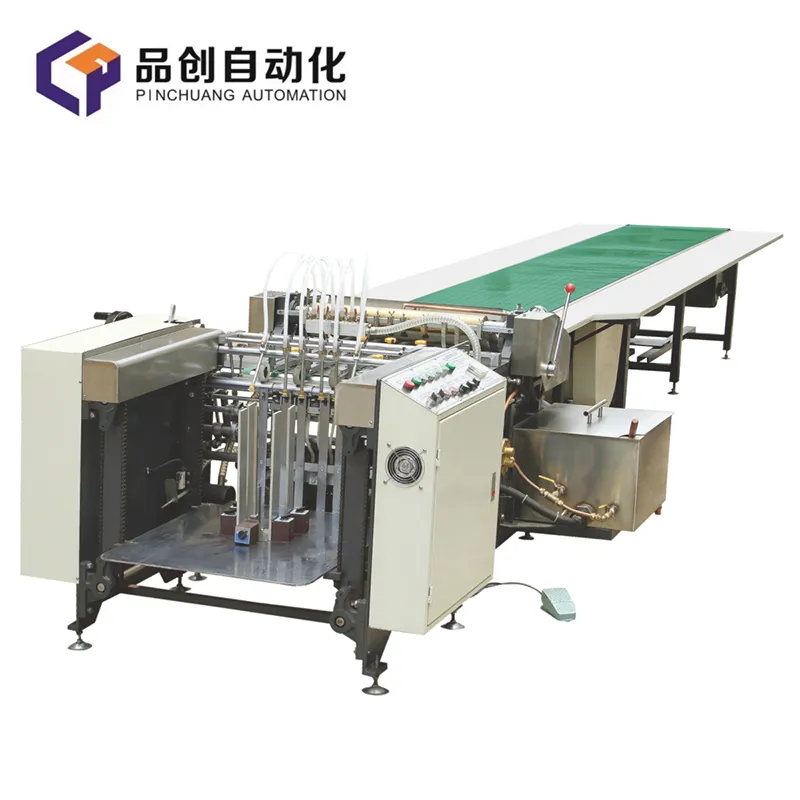
A comprehensive guide to modernizing your rigid box production line through precision adhesive application and automated workflows.
The Evolution of Precision in Premium Packaging
In the competitive landscape of luxury packaging, consistency is not merely a goal; it is a fundamental requirement. Brands that cater to high-end electronics, cosmetics, and confectionery industries demand perfection in every box. Historically, achieving this level of uniformity was labor-intensive and prone to human error. However, the introduction of the automatic paper gluing machine has fundamentally changed the manufacturing paradigm.
By transitioning from manual or semi-automatic processes to fully automated systems, manufacturers can ensure that every sheet of surface paper is coated with a precise amount of adhesive. This eliminates common defects such as bubbling, warping, or uneven bonding that frequently plague manual operations. For companies like Pinchuang, refining this technology has been the cornerstone of helping clients scale their production while maintaining an elite standard of quality.
This guide explores how an automatic paper gluing machine serves as the backbone of a consistent production line, the technical mechanisms behind its success, and why it is an essential investment for modern packaging facilities.
Why is Production Consistency Critical for Rigid Boxes?
Consistency in rigid box manufacturing refers to the ability to produce thousands of units that are identical in structural integrity and aesthetic finish. Any deviation in the gluing process can lead to significant waste and client rejections. When using an automatic paper gluing machine, the variable of human fatigue is removed from the equation.
Consistency affects several key areas of the final product:
Adhesive Thickness: Too much glue leads to seepage and "bleeding," while too little results in peeling.
Positioning Accuracy: Automated feeders ensure the paper is aligned perfectly with the gluing rollers every time.
Temperature Control: Most modern machines utilize hot-melt adhesives which require stable temperatures to maintain optimal viscosity.
Technical Mechanisms of an Automatic Paper Gluing Machine
Understanding how these machines operate provides insight into their efficiency. An automatic paper gluing machine typically incorporates a high-speed feeder, a precision roller system, and a sophisticated conveyor belt with suction capabilities. The suction system is particularly vital as it prevents the paper from shifting after the glue has been applied, ensuring the "tackiness" is preserved for the next stage of assembly.
Furthermore, these machines often feature ultrasonic double-sheet detection. This prevents two pieces of paper from being fed simultaneously, which would otherwise cause a jam and halt production. By integrating these sensors, the machine self-regulates, maintaining a steady flow of materials without the need for constant operator intervention.
At Pinchuang, our engineering focus is on the synchronization between the glue tank and the roller speed. This ensures that even at high speeds, the adhesive remains uniform. This level of technical sophistication is what distinguishes a professional-grade automatic paper gluing machine from entry-level equipment.
Strategic Advantages of Automation
Reduced Labor Dependency
By automating the gluing process, a factory can reallocate skilled workers to quality control and design roles, significantly reducing the overhead associated with manual assembly lines.
Material Optimization
Precise glue application reduces adhesive waste by up to 20%. Over a year of high-volume production, these savings can contribute significantly to the bottom line.
How to Select the Best Gluing Solution for Your Line
Choosing the right equipment requires an analysis of your specific production needs. Are you working with thin specialty papers or heavy cardstock? Does your product require hot or cold glue? These factors dictate the configuration of your automatic paper gluing machine.
Key features to look for include:
- Adjustable Speed Control: To match the pace of your downstream forming or assembly machines.
- Easy Cleaning Systems: Glue buildup is the primary cause of machine downtime; choose a design that allows for quick daily maintenance.
- Stainless Steel Construction: To prevent corrosion and ensure a long operational lifespan in industrial environments.
Pinchuang: Your Partner in High-Efficiency Packaging
Dongguan Pinchuang Automation Equipment Co., Ltd. is a premier manufacturer specializing in the research, development, and production of high-end rigid box machinery. Our commitment to innovation has made us a leader in providing comprehensive solutions for luxury packaging brands worldwide.
Our flagship automatic paper gluing machine is designed for versatility and precision, handling a wide range of paper sizes and weights with ease. When integrated with our other systems, such as the automatic case making machine or visual positioning units, it creates a seamless, high-speed production ecosystem.
With over a decade of expertise, Pinchuang prides itself on offering not just machines, but complete production optimization. We invite you to learn more about our company and our dedication to engineering excellence.
Why Choose Pinchuang Equipment?
Our machines are engineered for 24/7 reliability. Whether you are using an automatic rigid box making machine or a specialized grooving unit, you can expect unmatched precision and long-term durability.
Frequently Asked Questions
Q1: What are the primary benefits of upgrading to an automatic paper gluing machine?
The primary benefits include a 300% increase in production speed compared to manual methods, a significant reduction in glue consumption due to precision rollers, and the elimination of quality defects like bubbles or wrinkles. It ensures every piece of paper is processed with identical glue thickness.
Q2: Can the automatic paper gluing machine handle different types of adhesives?
Yes, most of our machines are compatible with both hot-melt (animal glue) and cold-water-based glues. Hot-melt glue is preferred for rigid boxes due to its fast-drying properties, while cold glue is often used for specific paper laminations. Our systems include heat control to manage adhesive viscosity.
Q3: How difficult is it to maintain an automatic paper gluing machine?
Routine maintenance is straightforward. It involves cleaning the glue rollers and tank at the end of every shift to prevent hardening. Pinchuang designs our machines with easy-access components, allowing for quick cleaning and lubrication of moving parts to ensure long-term reliability.
Q4: What paper sizes can the Pinchuang automatic paper gluing machine accommodate?
Our standard models, like the PC-650/850A, can handle a wide range of sizes. Typically, we support paper widths from 100mm up to 800mm. The versatility of our feeder system allows for quick changeovers between different box dimensions, making it ideal for diverse product lines.
Q5: Is it possible to integrate the gluing machine into an existing production line?
Absolutely. Our automatic paper gluing machine is designed as a modular unit. It can operate as a standalone station or be synchronized with visual positioning machines and forming units to create a fully automated rigid box production line.
Ready to Enhance Your Production Efficiency?
Consistency is the hallmark of quality in the packaging industry. Don't let manual inconsistencies hold your business back. Invest in the future of automated manufacturing with Pinchuang’s proven technology.