

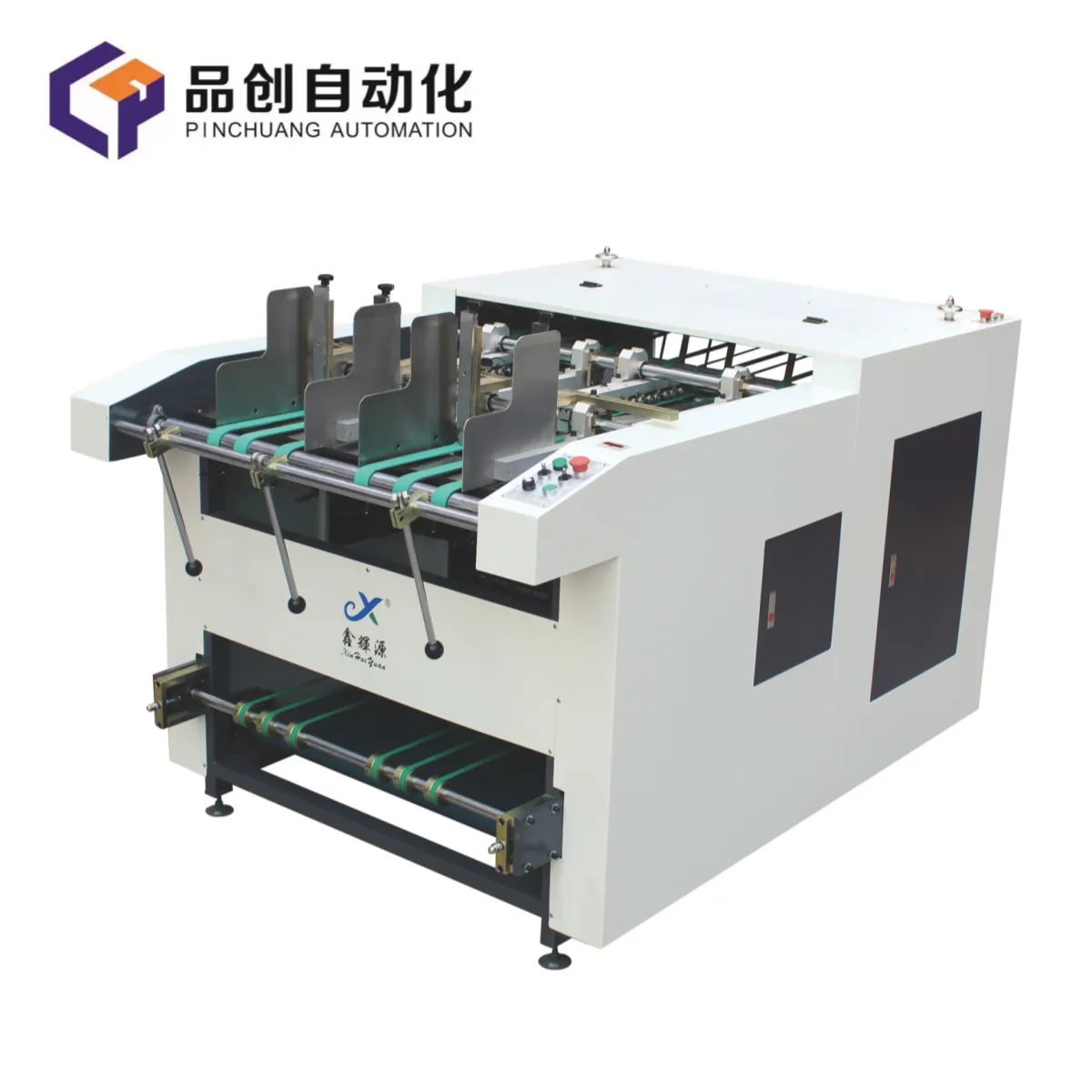
In the packaging industry, the process of creating precise fold lines is critical for high-quality box production. Traditionally, manufacturers relied on manual grooving methods, where skilled workers use hand tools or semi-manual machines to create V-shaped grooves on paperboard. While manual grooving offers flexibility for small-scale or custom projects, it has significant limitations, particularly when scaling production or maintaining consistent quality.
The automatic v grooving machine has emerged as a modern solution to address these challenges. By automating the groove cutting process, it ensures accuracy, repeatability, and efficiency while reducing labor costs and human error. This guide will explore the differences between automatic and manual grooving methods, highlighting which approach is more suitable depending on production goals, material types, and operational requirements.
Manual Grooving: Strengths and Limitations
Manual grooving has been the standard for decades, largely due to its accessibility and low initial investment. Skilled operators can create grooves in any type of paperboard, adjust angles on the fly, and manage unusual or irregular designs. This flexibility makes manual grooving a preferred option for prototypes, limited edition boxes, or highly customized products where automation might struggle to adapt quickly.
However, manual grooving is labor-intensive, time-consuming, and heavily dependent on operator skill. Even experienced workers can produce inconsistent groove depth, spacing, or alignment, especially during long production runs. Variations in groove precision can lead to folding issues, material waste, and ultimately, reduced product quality. In addition, manual methods cannot match the speed required for high-volume packaging lines, which limits overall production efficiency and scalability.
Automatic V Grooving Machine: Advantages Over Manual Methods
The automatic v grooving machine addresses nearly all limitations of manual grooving. First, it offers precision. Digital controls and calibrated cutting wheels ensure uniform groove depth and angle, producing fold lines that meet strict quality standards. This level of consistency is especially important for luxury packaging or high-end rigid boxes, where even minor imperfections can compromise the final product’s appearance and structural integrity.
Second, automation dramatically increases production speed. Machines can process hundreds of sheets per hour, far exceeding what manual operators can achieve without fatigue or error. Third, material waste is significantly reduced. Automatic machines minimize the likelihood of misaligned or uneven grooves, saving costly paperboard sheets. Fourth, labor requirements are lower. Operators are primarily responsible for machine supervision and quality checks rather than performing repetitive manual cutting, allowing staff to focus on higher-value tasks.
Finally, automatic machines integrate seamlessly with other packaging equipment, such as folding, gluing, and assembly lines. This integration enables a fully automated workflow, reducing bottlenecks and improving overall production efficiency.
Comparing Quality and Precision
Precision is a key factor in choosing between manual and automatic grooving. Manual grooving often produces small inconsistencies, which can affect folding angles and box assembly, particularly in large-scale production. On the other hand, the automatic v grooving machine provides consistently accurate grooves due to programmable settings, blade calibration, and alignment sensors.
High-end boxes, such as cosmetic, jewelry, or gift packaging, require flawless folding lines to maintain both aesthetic appeal and structural integrity. Automatic grooving machines can handle thick, laminated, or coated paperboard, ensuring a smooth fold without cracking. Manual methods may struggle with thicker or coated boards, resulting in uneven folding and potential damage to the material. Therefore, for premium packaging, automated grooving is generally considered superior in quality and reliability.
Efficiency and Production Speed
Production speed is another critical factor in evaluating grooving methods. Manual grooving is inherently slow, as each sheet must be positioned, cut, and inspected individually. Operator fatigue, skill variations, and human error further reduce throughput.
In contrast, the automatic v grooving machine operates continuously at high speed, capable of processing large quantities of sheets with minimal intervention. Integrated feeders, alignment systems, and digital controls allow operators to program multiple groove patterns, reducing downtime during production changes. For manufacturers aiming to scale operations, meet high-volume orders, or maintain consistent lead times, automatic grooving machines offer unmatched efficiency and reliability.
Cost Considerations: Short-Term vs Long-Term
While manual grooving machines or hand tools are less expensive upfront, they incur higher labor costs and produce lower throughput. Mistakes and material waste can further increase operational costs over time.
Automatic V grooving machines require higher initial investment but offer substantial long-term savings. Reduced labor, lower material waste, increased production speed, and consistent quality all contribute to a faster return on investment. Additionally, the reliability and longevity of automated machines often result in fewer maintenance issues compared to older manual equipment. For businesses focused on growth, automation offers both financial and operational benefits.
Our Company and Solutions
Dongguan Pinchuang Automation Equipment Co., Ltd. provides high-quality packaging machinery, including automatic v grooving machines, corner pasting machines, paper gluing machines, and rigid box assembly equipment. Our solutions are designed to meet the demands of modern packaging manufacturers, from small-scale operations to high-volume production lines.
We focus on precision, reliability, and adaptability. Our machines are engineered for consistent groove quality, fast operation, and easy integration with other packaging systems. Beyond equipment supply, we offer technical support, machine customization, and operator training, helping clients achieve efficient production, minimal waste, and superior packaging quality. Choosing our automatic V grooving machines allows companies to optimize their operations and deliver premium products consistently.
FAQ
Q1: What is an automatic v grooving machine?
An automatic v grooving machine is a machine designed to cut precise V-shaped grooves in paperboard sheets, enabling accurate folding and high-quality box production.
Q2: How does it differ from manual grooving?
Unlike manual grooving, automatic machines use digital controls, sensors, and precise blades to ensure uniform grooves, faster production, and reduced material waste.
Q3: Why is it better for high-volume production?
Automatic V grooving machines process sheets at high speed, maintain consistent quality, and reduce labor dependency, making them ideal for large-scale production.
Q4: Can it handle different paperboard types?
Yes, automatic V grooving machines can process thick, laminated, coated, or standard paperboards with adjustable groove depth and angle settings.
Q5: How do I decide between manual and automatic grooving?
Consider production volume, precision requirements, material types, labor availability, and long-term cost efficiency. For high-volume or premium packaging, automatic grooving is generally preferable.