

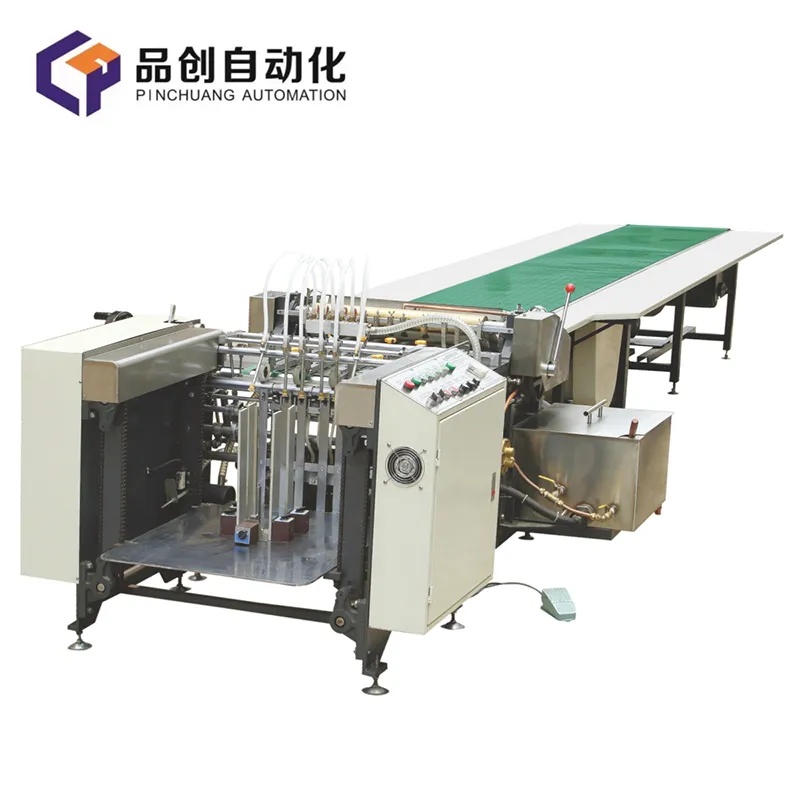
In the packaging industry, the gluing process plays a critical role in ensuring that boxes and cartons are sturdy, visually appealing, and durable. Traditionally, gluing was performed manually, relying on human precision to apply adhesive and fold edges. However, the emergence of the automatic paper gluing machine has transformed the industry, providing speed, consistency, and quality that are difficult to achieve through manual labor.
Comparing automatic and manual gluing is essential for manufacturers looking to improve efficiency, reduce labor costs, and maintain consistent product quality. This guide examines the pros and cons of both methods, highlights practical considerations, and helps packaging operations determine which approach is best suited to their production needs.
Manual Gluing: Advantages and Limitations
Manual gluing involves human operators applying adhesive and folding box components by hand. This method offers certain advantages, particularly for small-scale operations, customized designs, or limited production runs. One advantage is flexibility: operators can handle irregular shapes, unique designs, or small batch orders that might be challenging for machines. Manual gluing also requires minimal initial investment, making it accessible for startups or low-volume production lines.
However, manual gluing comes with significant limitations. Consistency is difficult to maintain, as glue application may vary between operators, potentially leading to weak joints, uneven surfaces, or adhesive excess. Labor costs can be high, especially for large-scale production, as repetitive gluing is time-consuming and physically demanding. Additionally, production speed is limited by human capacity, making manual gluing unsuitable for high-volume packaging lines. Safety concerns also arise from prolonged exposure to adhesives and repetitive tasks.
Automatic Paper Gluing Machine: Advantages and Benefits
The automatic paper gluing machine addresses many challenges associated with manual gluing, offering significant advantages in efficiency, quality, and scalability. These machines are designed to apply adhesive with precision and consistency, ensuring uniform glue coverage across all boxes. This results in stronger, more reliable joints and improved visual appeal, which is particularly important for luxury packaging and gift boxes.
Automation significantly increases production speed, allowing manufacturers to process hundreds or even thousands of boxes per hour. This capability reduces labor dependency, freeing operators to supervise multiple machines or focus on quality control tasks. Modern machines often include adjustable glue settings, visual positioning systems, and flexible feeding mechanisms to accommodate various box sizes, paper thicknesses, and materials, enhancing versatility across different production lines.
Furthermore, automatic machines reduce material waste by applying exact amounts of adhesive, minimizing rework and defective products. The result is a streamlined workflow that improves efficiency, lowers operational costs, and maintains high product quality across large-scale packaging operations.
Comparing Efficiency and Production Output
Efficiency is one of the most critical factors when choosing between manual gluing and an automatic paper gluing machine. Manual gluing is inherently slower and prone to inconsistencies, limiting the number of boxes that can be processed per hour. High-volume manufacturers may struggle to meet tight deadlines or maintain quality standards using manual methods.
In contrast, automatic machines deliver consistent, high-speed output. Advanced models integrate feeding, gluing, folding, and conveyor systems into a seamless workflow, ensuring that each box is processed uniformly. This integration reduces the risk of errors, enhances overall production efficiency, and allows manufacturers to scale their operations quickly. Additionally, machines with programmable controls and adjustable settings support multi-product lines, allowing for quick transitions between different box sizes or materials without significant downtime.
Cost Considerations and Return on Investment
While manual gluing requires lower upfront investment, long-term costs can be higher due to labor expenses, slower production rates, and material waste. Manual methods also increase the risk of defective boxes, potentially leading to additional rework or customer complaints.
Investing in an automatic paper gluing machine may involve higher initial costs, but the return on investment is typically realized through reduced labor, faster production, and consistent product quality. Machines are designed for durability, low maintenance, and energy efficiency, further contributing to cost savings over time. Additionally, the ability to integrate with other packaging equipment, such as automatic corner pasting machines, box assembly machines, and case making machines, maximizes overall workflow efficiency, making automation a strategic long-term investment for packaging manufacturers.
Choosing the Right Approach for Your Production Line
Selecting between manual gluing and an automatic paper gluing machine depends on production volume, box complexity, material types, and business goals. For small-scale operations, customized packaging, or seasonal orders, manual gluing may be sufficient. However, for medium to large-scale production, automation provides unparalleled speed, precision, and consistency.
Manufacturers should also consider the machine’s flexibility, ease of maintenance, and compatibility with existing packaging lines. Machines with adjustable glue volume, automatic feeding, and visual positioning systems allow for efficient operation across multiple product types. Additionally, consider the total cost of ownership, including long-term labor savings, reduced waste, and improved quality assurance, when evaluating automation as a solution.
About Our Company and Automation Solutions
Dongguan Pinchuang Automation Equipment Co., Ltd. is a leading manufacturer of advanced packaging machinery, specializing in high-quality automatic paper gluing machines. Our machines are engineered to enhance production efficiency, ensure consistent glue application, and improve the quality of rigid boxes and cartons.
In addition to paper gluing machines, we provide automatic corner pasting machines, box assembly machines, automatic case making machines, and v grooving machines. Our solutions are widely adopted in industries such as luxury packaging, cosmetics, electronics, and gift boxes. We offer technical support, customized solutions, and global service, helping manufacturers optimize their production lines and achieve sustainable growth.
Conclusion
Choosing between manual gluing and an automatic paper gluing machine requires careful consideration of production volume, material requirements, and operational goals. While manual gluing provides flexibility for small-scale or specialized orders, automation delivers speed, consistency, and efficiency that are essential for modern packaging operations.
Investing in an automatic paper gluing machine enhances product quality, reduces labor costs, minimizes waste, and allows manufacturers to scale production effectively. By integrating automation into your packaging line, you can achieve a balance of efficiency, precision, and profitability that manual methods cannot match.
FAQ
Q1: What is an automatic paper gluing machine?
An automatic paper gluing machine is equipment that applies adhesive to boxes or carton edges automatically, ensuring consistent coverage, precise folding, and high-quality output.
Q2: How does an automatic paper gluing machine differ from manual gluing?
Automatic machines provide faster, consistent, and precise glue application, while manual gluing relies on human operators and is slower, less consistent, and more labor-intensive.
Q3: What are the main benefits of using an automatic paper gluing machine?
Benefits include higher production speed, uniform quality, reduced labor dependency, minimal material waste, and improved workflow efficiency.
Q4: Is manual gluing still relevant today?
Yes, manual gluing can be suitable for small batches, customized designs, or low-volume production, but it is less efficient for large-scale operations.
Q5: Why should manufacturers invest in automatic paper gluing machines?
Investing in automation ensures consistent quality, faster production, lower labor costs, and better integration with modern packaging lines, improving overall profitability.