

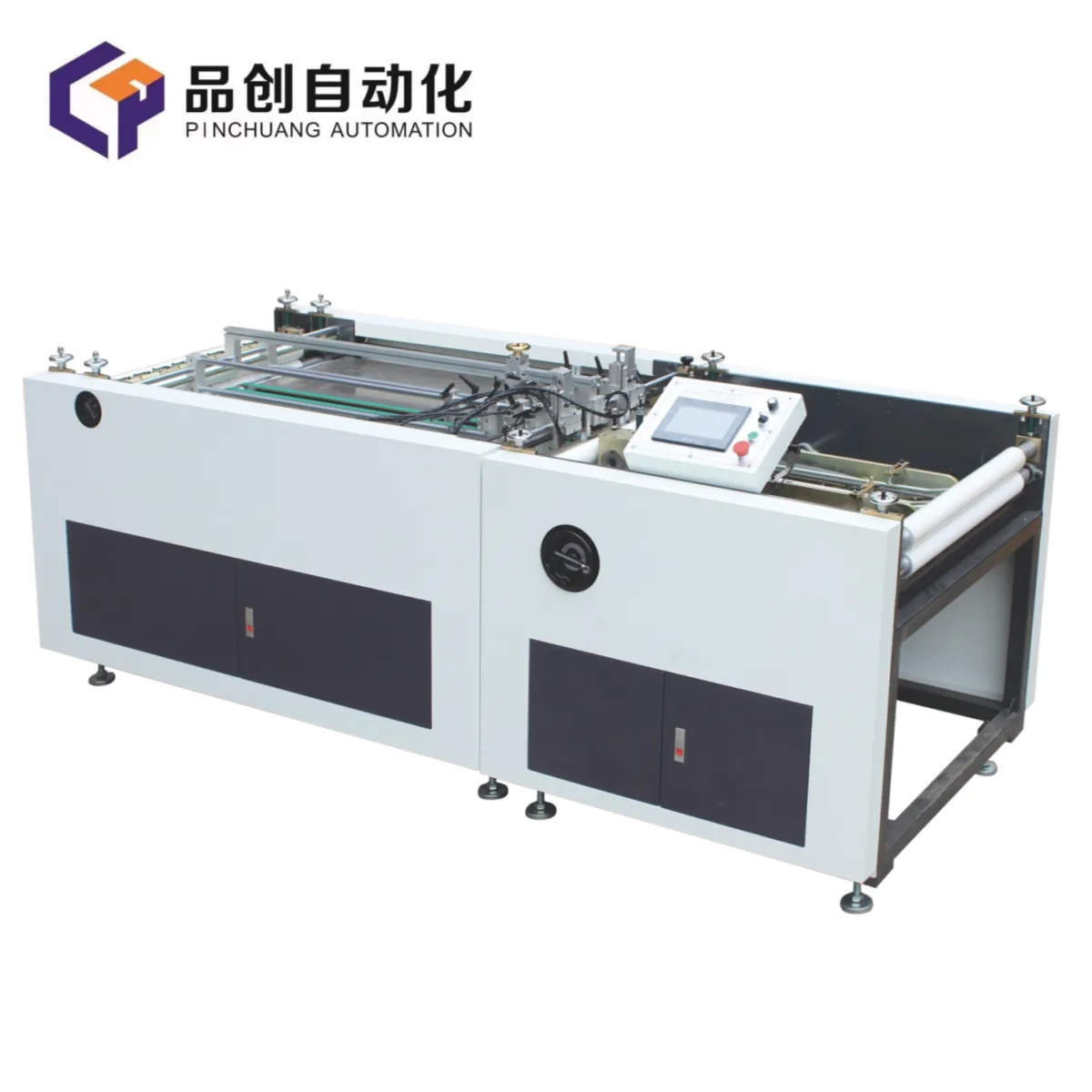
In the rigid box packaging industry, selecting the right equipment is essential for achieving optimal production efficiency and product quality. One of the most common decisions manufacturers face is whether to invest in a fully automatic case making machine or opt for a semi-automatic solution. Each option offers distinct advantages and limitations, depending on production scale, budget, and operational requirements.
As demand for high-quality packaging continues to grow across industries such as luxury goods, cosmetics, and electronics, understanding the differences between these two types of machines becomes increasingly important. This guide provides a detailed comparison of an automatic case making machine and semi-automatic systems, helping you make an informed decision for your production line.
Understanding the Working Principles of Automatic and Semi-Automatic Case Making Machines
To effectively compare these two options, it is important to understand how they operate. A fully automatic case making machine integrates multiple processes—such as feeding, positioning, gluing, wrapping, and pressing—into a continuous and automated workflow. The machine is controlled by advanced systems, allowing it to operate with minimal human intervention while maintaining high precision and consistency.
In contrast, a semi-automatic machine requires manual involvement in certain stages of the production process. Operators may need to load materials, position components, or initiate specific steps manually. While some functions are automated, the overall workflow depends heavily on human input.
The difference in working principles directly impacts production efficiency and consistency. An automatic case making machine ensures uniform output and reduces the likelihood of human error, while a semi-automatic system offers more flexibility but may result in variations in quality.
Additionally, automation allows for better integration with other equipment in the production line. A fully automatic case making machine can be seamlessly connected with machines such as v grooving machines and box forming machines, creating a streamlined workflow that enhances overall efficiency.
Production Efficiency and Output Comparison
Production efficiency is one of the most significant factors when comparing an automatic case making machine with a semi-automatic system. Fully automatic machines are designed for high-speed operation, enabling manufacturers to produce large volumes of cases within a short period. This makes them ideal for businesses that handle bulk orders or operate in high-demand markets.
Semi-automatic machines, on the other hand, have lower production speeds due to the need for manual intervention. The overall output depends on the number of operators and their skill levels, which can vary throughout the production process. This can lead to inconsistencies in production speed and longer lead times.
Another advantage of an automatic case making machine is its ability to operate continuously with minimal downtime. Automated systems are less affected by factors such as worker fatigue, allowing for consistent performance over extended periods. In contrast, semi-automatic processes may require frequent pauses and adjustments.
For manufacturers aiming to scale their operations, an automatic case making machine offers a clear advantage. It enables higher output without significantly increasing labor costs, making it a more efficient solution for long-term growth.
Quality and Consistency: Automation vs Human Intervention
Quality and consistency are critical in rigid box production, particularly for industries that require premium packaging. An automatic case making machine excels in this area by using advanced positioning systems and precise control mechanisms to ensure uniform results.
In a fully automated system, each step of the process is carefully controlled, minimizing variations and defects. Features such as visual positioning systems allow the machine to achieve high levels of accuracy, ensuring that every case meets strict quality standards.
Semi-automatic machines, while capable of producing high-quality results, rely on operator skill and consistency. Human involvement introduces the possibility of errors, such as misalignment or uneven glue application. These inconsistencies can affect the appearance and durability of the final product.
Consistency is especially important for brands that prioritize packaging quality as part of their identity. By using an automatic case making machine, manufacturers can maintain a consistent standard across all products, enhancing brand reputation and customer satisfaction.
In addition, automated systems often include quality control features that detect and correct defects in real time, further improving overall production quality.
Labor Requirements and Cost Considerations
Labor cost is a key factor in determining whether to choose an automatic case making machine or a semi-automatic system. Semi-automatic machines require a larger workforce to operate effectively, as multiple operators may be needed to handle different stages of the process.
An automatic case making machine significantly reduces labor requirements by automating most tasks. This not only lowers labor costs but also simplifies workforce management. Fewer operators are needed, and the risk of human error is minimized.
However, the initial investment for a fully automatic machine is typically higher than that of a semi-automatic system. For small businesses with limited budgets, this can be a deciding factor. Despite this, the long-term cost savings associated with automation often outweigh the initial expense.
Reduced material waste is another financial benefit. Precise control over processes such as gluing and positioning ensures efficient use of materials, contributing to lower operational costs.
When evaluating cost, it is important to consider the total cost of ownership, including maintenance, energy consumption, and productivity gains. An automatic case making machine often provides a better return on investment over time.
Flexibility and Application Scenarios
Flexibility is an important consideration, especially for manufacturers that produce a variety of box types and sizes. Semi-automatic machines offer greater flexibility in certain situations, as operators can quickly adjust processes to accommodate different designs or materials.
An automatic case making machine, however, has become increasingly flexible due to advancements in technology. Modern machines are designed to handle multiple product specifications and support quick changeovers, allowing manufacturers to switch between different production requirements efficiently.
For businesses focused on high-volume production with standardized designs, an automatic case making machine is the preferred choice. It ensures consistent output and maximizes efficiency.
On the other hand, semi-automatic machines may be more suitable for small-scale production or highly customized projects where flexibility is more important than speed.
Ultimately, the choice depends on your specific production needs. A thorough evaluation of your product range and market demands will help determine the most suitable solution.
Which Option Should You Choose for Your Production Line?
Choosing between an automatic case making machine and a semi-automatic system requires careful consideration of your business goals and operational requirements. For manufacturers aiming to achieve high efficiency, consistent quality, and scalability, a fully automatic solution is often the best choice.
An automatic case making machine provides significant advantages in terms of speed, precision, and cost efficiency. It is particularly suitable for businesses that operate in competitive markets and need to meet high production demands.
Semi-automatic machines, while more affordable, are better suited for smaller operations or businesses with limited production requirements. They offer flexibility but may not be able to support large-scale growth.
In many cases, companies start with semi-automatic equipment and transition to automation as their business expands. This approach allows them to gradually scale their operations while managing costs.
Ultimately, the decision should be based on a comprehensive evaluation of production volume, budget, and long-term growth plans.
About Our Company and Our Automatic Case Making Machine Solutions
Dongguan Pinchuang Automation Equipment Co., Ltd. is a professional manufacturer specializing in packaging automation equipment. With over 15 years of experience, we provide advanced solutions for rigid box production.
Our product range includes automatic case making machine, automatic box assembly machine, automatic visual positioning machine, automatic v grooving machine, and automatic paper gluing machine. These machines are widely used in industries such as luxury packaging, cosmetics, electronics, and gift boxes.
We operate a modern manufacturing facility covering more than 10,000 square meters and have a skilled engineering team dedicated to innovation and quality. Our automatic case making machine is designed with high precision, stable performance, and user-friendly operation.
We also offer customized solutions tailored to different production needs, helping customers optimize efficiency and reduce costs. With clients in over 30 countries, we are committed to delivering reliable equipment and excellent service.
Conclusion
When comparing an automatic case making machine with a semi-automatic system, it is clear that automation offers significant advantages in efficiency, consistency, and scalability. While semi-automatic machines may be suitable for smaller operations, they are limited in their ability to meet the demands of modern packaging production.
An automatic case making machine provides a long-term solution for businesses looking to improve productivity and maintain high-quality standards. By investing in the right equipment, manufacturers can enhance their competitiveness and achieve sustainable growth.
FAQ
Q1: What is the difference between an automatic case making machine and a semi-automatic machine?
An automatic case making machine operates with minimal human intervention, while a semi-automatic machine requires manual input at various stages of production.
Q2: Is an automatic case making machine more efficient than a semi-automatic system?
Yes, an automatic case making machine offers higher production speed, consistent output, and reduced downtime compared to semi-automatic systems.
Q3: Can an automatic case making machine reduce labor costs?
An automatic case making machine reduces labor costs by automating most processes, requiring fewer operators and minimizing human error.
Q4: When should I choose an automatic case making machine over a semi-automatic one?
You should choose an automatic case making machine when you need high-volume production, consistent quality, and long-term cost efficiency.
Q5: Is an automatic case making machine suitable for small businesses?
Yes, depending on production needs, an automatic case making machine can support small businesses looking to improve efficiency and scale operations.